
How Do I Frame a Canvas Painting?
A canvas painting is fabric under tension, not a print in a rebate. Framing it well means protecting the stretcher, leaving the painted face room to breathe, and choosing a profile that does not crush the surface—especially if the work is textured. Most hand-painted canvases from studios like Canvashi arrive rolled. Stretching comes first. The frame comes second. Glass, in most cases, does not come at all.
Canvas is a plain-woven cotton or linen support, usually coated with gesso and stretched across wood. The wooden chassis is a stretcher bar: a frame the fabric is fastened to, sometimes with keys at the corners so tension can be adjusted later. Gallery wrap pulls the image around the sides. A white border wrap leaves unpainted canvas for a traditional frame to hide. You cannot frame loose cloth. You frame the stretcher.
Stretch before you shop for molding
Lay the painting face down on a clean sheet. Center the bars. Staple from the middle of each side outward, opposite sides in pairs, then fold the corners tight without burying thick paint under a wad of fabric. Deep impasto—Tate’s word for thick, standing paint—needs a deeper bar so the peaks do not rub the wall or the frame lip. If the paste is high, a framer should stretch it. Keys in the corners can be tapped later if the canvas slacks in dry air; do not force them until the paint is fully dry.
Canvashi’s textured works—white relief fields, teal-green grounds, blue-beige seaside canvases—are built surfaces. Treat the ridges as part of the object the frame must clear.
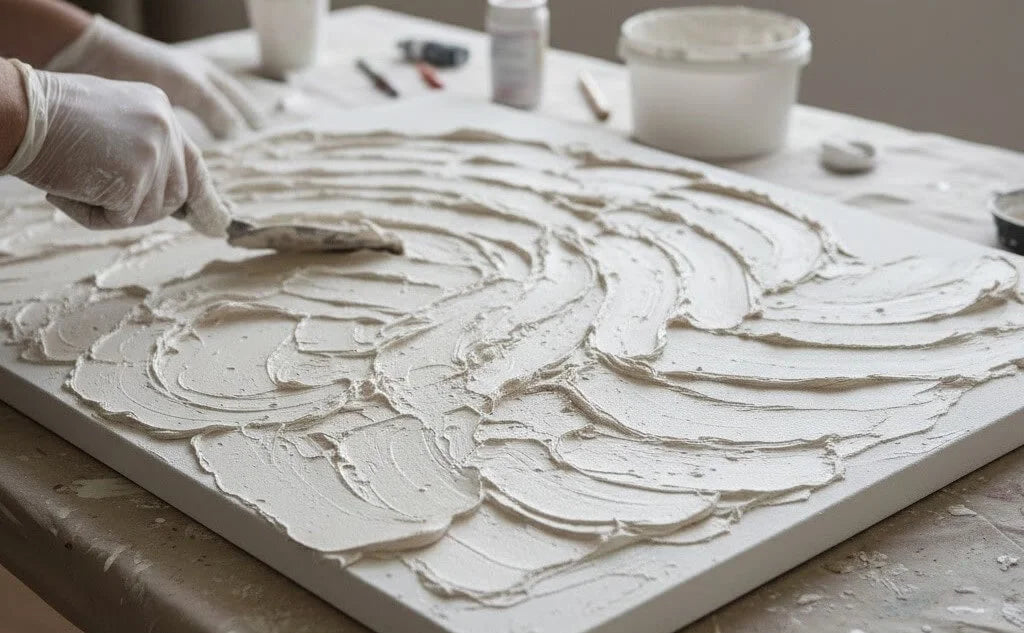
Knife-built paste has height. A frame that sits proud of that height will bruise the paint the first time the canvas is set into a tight rebate.
Three honest ways to present a stretched canvas
1. No frame (gallery wrap).
The sides are painted or wrapped. You hang from D-rings on the stretcher. This is the cleanest look for contemporary abstraction and for heavy texture: nothing presses the face. The edge of the wood is visible in profile. A backing board on the reverse still helps. Smithsonian conservation notes on loans treat a rigid backing as basic protection: it cuts vibration, keeps dust off the reverse, and steadies humidity swings. Screw the board to the stretcher, not through the paint.
2. Floater frame.
A wooden tray surrounds the stretcher with a small gap so the painting appears to hover. The face is fully visible. The sides stay in shadow. This is the usual choice for extra-large textured work because the lip does not overlap the ridges. Measure the outside of the stretcher, not the painted image. The floater must be deeper than the combined depth of bar plus paste, or the peaks will hit the wall or the tray.
3. Traditional frame with a rebate.
A lip covers a strip of the edge. Use this when the canvas has an unpainted border, or when the room wants a more finished object. The rebate must not touch standing paint. If the work goes to the edge, a traditional lip will hide part of the image and can scuff texture. Float the canvas inside the rebate on spacers rather than jamming it home.
A simple wood surround can be enough. The textured white canvas below sits in a pale timber edge that reads as part of the wall, not as a second picture.

Should a canvas sit under glass?
Usually no. Oil and acrylic on canvas are meant to be seen as paint in air. Glass adds reflection, weight, and a microclimate. Tate’s research on glazing is written for works on paper, where glazing is standard and should be spaced off the object. That spacing rule still matters if you ever glaze a fragile contemporary surface: glass or acrylic must not touch the paint. For a typical hand-painted canvas, skip the glazing. If a room is very dirty or the work must travel, a shadow-box with a gap and museum acrylic is a specialist job, not a poster frame from a mall.
Never press glass onto wet or freshly varnished paint. Never let broken glass sit against a canvas. If you do glaze, use spacers, a sturdy molding that can carry the weight, and a backing that allows a little air.
How to choose the profile
Match the frame to the painting’s temperature, not to the sofa.
- Warm oak and linen rooms take unfinished or light oak floaters.
- Cool gray interiors take ash, black, or pale maple.
- Gold leaf on the canvas rarely wants a gold frame; the two metals compete. A raw or dark floater is quieter.
- High-contrast black-and-white work can take a thin black floater or no frame.
- Thick texture wants depth more than ornament. A skinny decorative molding on a 50-inch relief canvas looks like trim on architecture.
Keep the frame thinner than the visual weight of the painting. Extra-large abstraction already finishes the wall. The molding should recede.
Measure twice: stretcher width and height, stretcher depth, and the highest point of the paint. Order the floater to the stretcher, then confirm the tray is deeper than the paste.
Fitting the painting into a floater
Work face up on a padded table. Set the stretcher into the tray so the gap is even on all four sides—often about a quarter inch. From the reverse, drive screws through the floater into the stretcher bars, not into the canvas. Use the number of screws the span needs; a wide painting will twist if only two corners are held.
Attach hanging hardware to the floater or to the stretcher if the tray is shallow: two D-rings, one-third down, or a fitted cleat for extra-large work. Do not hang a heavy floater from a single sawtooth.
Add a backing board if the reverse is open. Leave the keys accessible if the stretcher has them.
What not to do
Do not force a thick canvas into a ready-made poster frame.
Do not tape the reverse with household tape.
Do not screw through the face to “secure” the art.
Do not varnish and frame on the same day.
Do not store a framed canvas in a damp garage; wood and fabric move at different rates.
Do not let the frame lip ride on knife ridges.
If the painting is still on the roll, do not design the frame from the unstretched sheet. Stretch, let it settle, then measure.
A short framing order
- Stretch the canvas square and let it rest.
- Measure stretcher and paint height.
- Choose gallery wrap, floater, or traditional rebate.
- Skip glass unless a conservator has a reason.
- Fit with even gaps; screw from the reverse.
- Hang from two points.
Framing is protection with a profile. A canvas painting that is stretched well, cleared of the lip, and hung as a solid object will look finished whether the molding is raw oak or absent.
Do I have to frame a canvas painting?
No. A gallery-wrapped stretcher can hang on its own. Frame when you want a finished edge, extra protection, or a small shadow gap around the image.
What is a floater frame?
A tray that surrounds the stretcher with a gap so the painting appears to hover. The face stays fully visible—useful for textured work.
Should I put glass over oil or acrylic on canvas?
Usually not. Paint on canvas is meant to be seen in open air. If you must glaze, space the glazing off the surface.
Can I frame a painting that arrived rolled?
Not until it is stretched. The frame attaches to the wooden bars, not to loose fabric.
How deep should the frame be for textured paint?
Deeper than the stretcher plus the highest ridge. If the paste hits the lip or the wall, the frame is too shallow.
What wood color works with neutral textured canvas?
Light oak or unfinished timber for warm rooms; ash or thin black for cooler rooms. Let the painting lead.
Where do hanging hooks go on a framed canvas?
On the floater or stretcher, two points, about one-third down from the top. Extra-large work may need a cleat.