How to Choose Landscape Artwork That Holds as Land, Not as a Postcard
A landscape that still needs a trail name is a map. A canvas that keeps only mass, weather, and a split between ground and sky can finish a contemporary room. That is the difference worth shopping for. Hills, mist, a darker ridge, a quieter field—those can sit with modern furniture. A labeled peak and a souvenir cabin usually cannot.
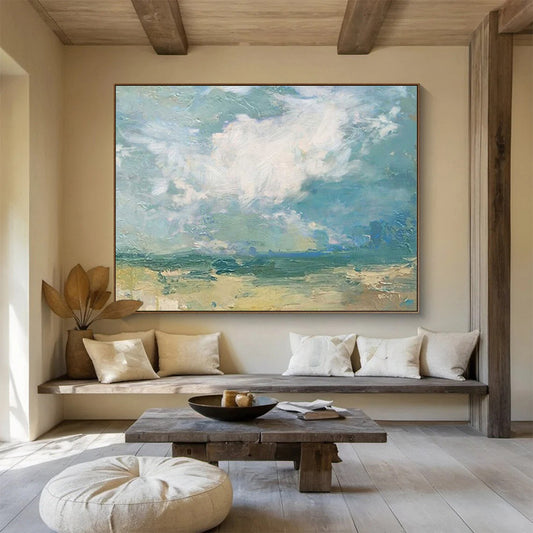
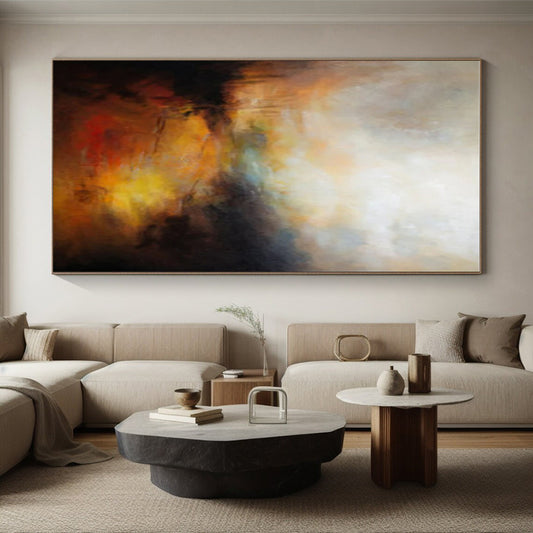
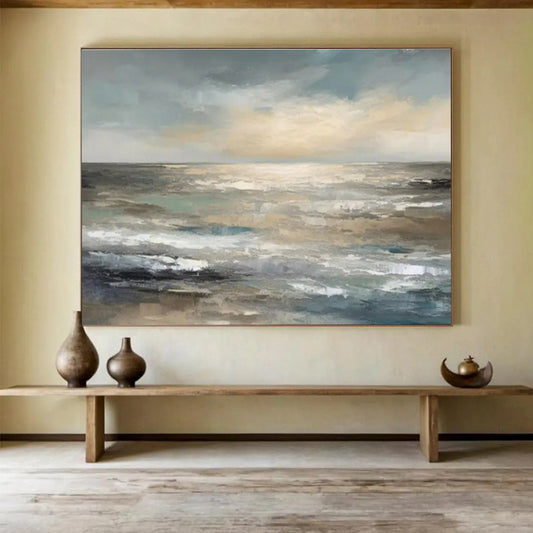
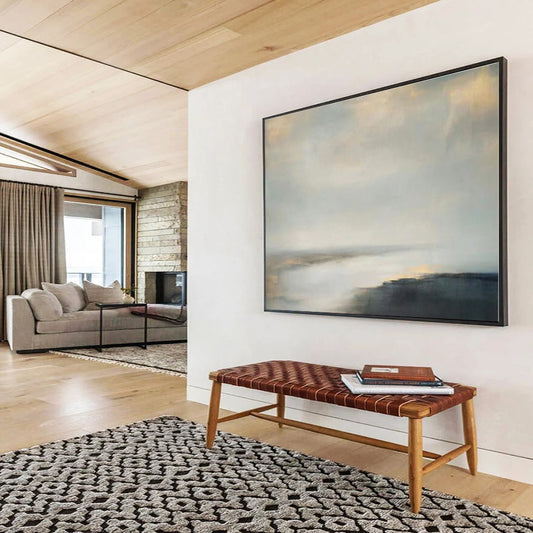
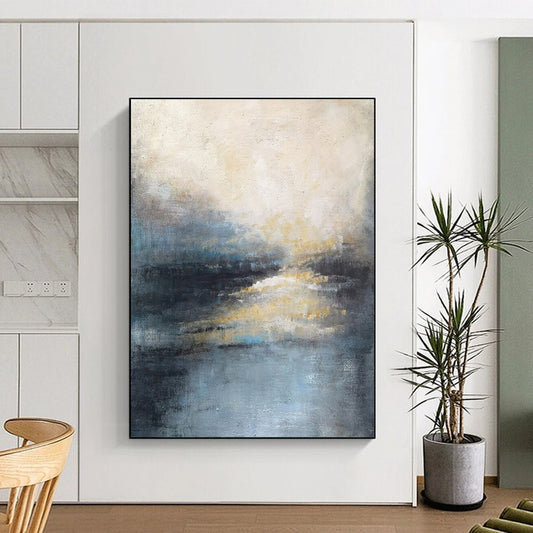
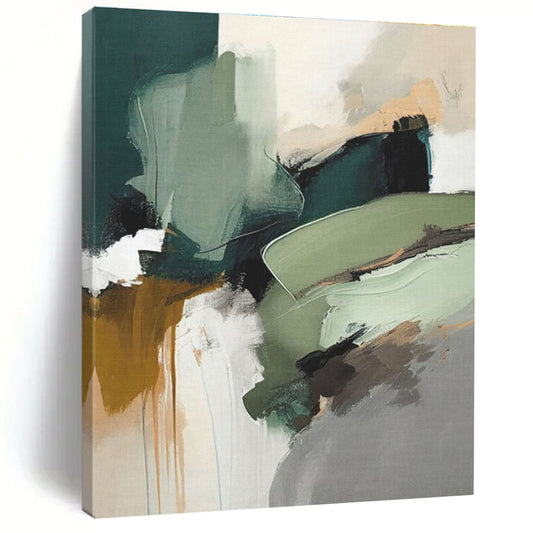
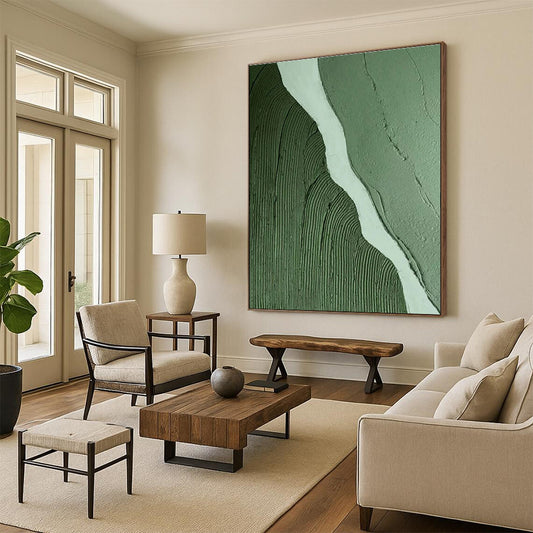
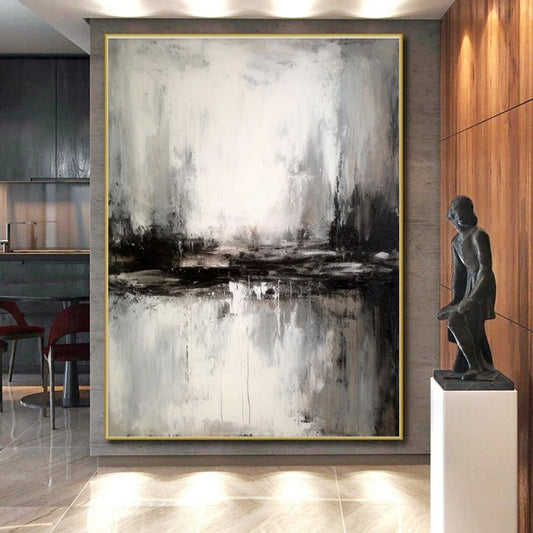
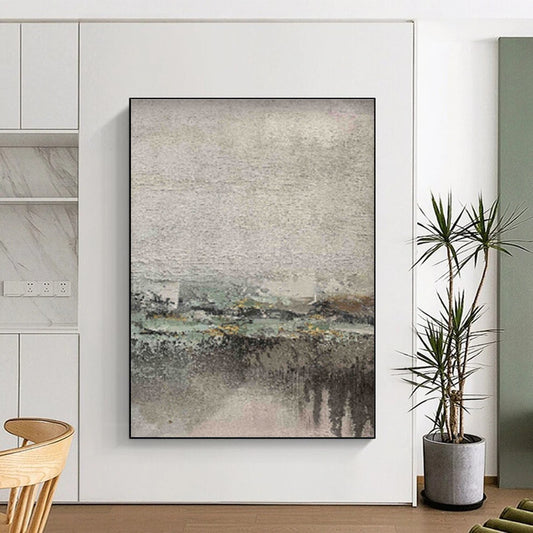
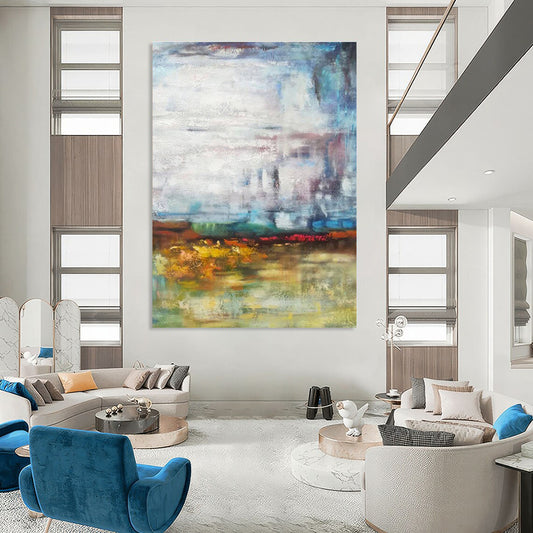
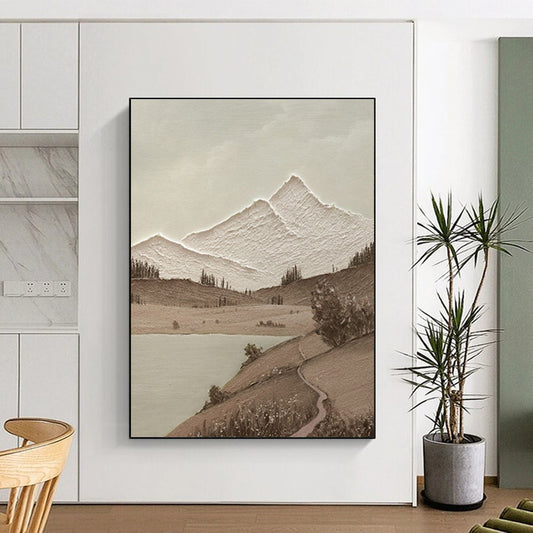
Landscape Artwork here means hand-painted canvas in that middle register: abstract hillsides, misted valleys, earth slabs, and seaside land that has already let go of the brochure. The listing is a climate. The piece you receive is painted to order in that climate.
What a landscape is allowed to be
Wikipedia’s article on landscape painting starts with the wide view: land arranged as a coherent structure, sky almost always included, weather often doing part of the work. It also draws a line that helps at checkout. If the primary job is to depict a specific, nameable place—especially with buildings forward—it is a topographical view. Topography belongs in a study or a travel memory. Most living rooms need structure, not a GPS pin.
Tate’s glossary on landscape is the short history you actually use. For a long time land was only background to a saint or a portrait. Then land became the subject. Later it became a way to paint light and air rather than trees as inventory. That last habit is the one that survives next to a gray sofa.
Tate’s note on Luminism names a related American attention to light on land and water—quiet planes, atmosphere, less theatre. You do not need the school. You need the test: from the far side of the room, do you read land and sky as two temperatures, or do you read a checklist of objects?
A working split:
- Abstract landscape: mass, mist, a horizon, color as weather.
- Soft topography: a recognizable hill or shore, still quiet enough to live with.
- Postcard landscape: named peaks, windows in cabins, paths you could follow. Leave it.
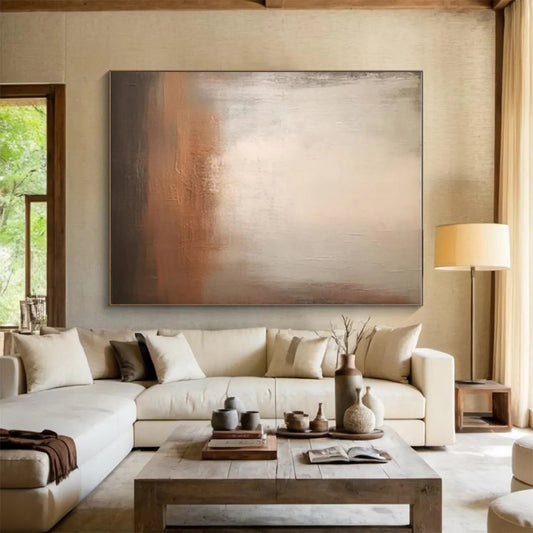
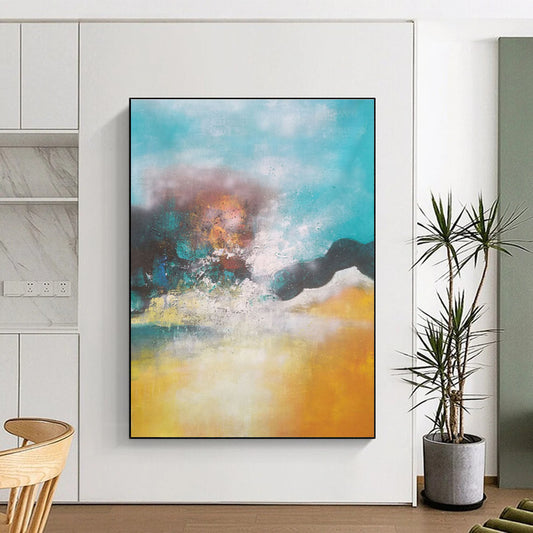
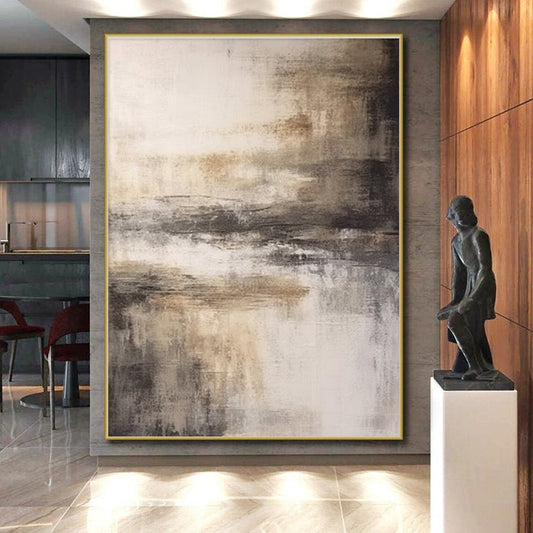
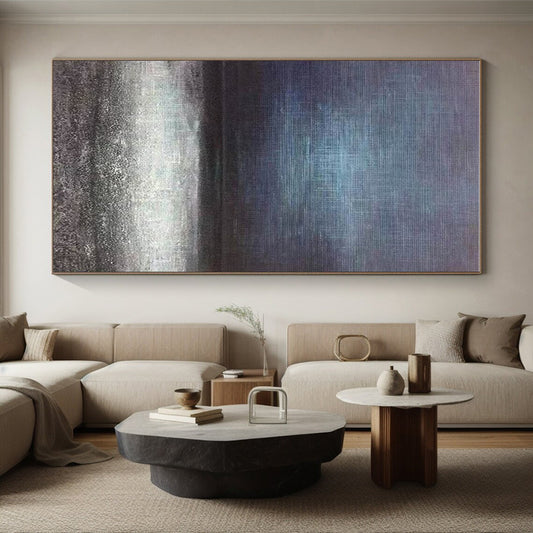
Canvashi’s landscapes lean toward the first two: blue-green-beige land, orange-black textured ground, gray seaside fields. If the rest of the house is already abstract, keep the third kind off the wall.
How to match land to the room
Choose temperature before you choose “forest green.” Oak and walnut sit with olive, clay, muted rust, and warm mist. Gray floors and stone sit with ash, cool green-gray, and a quieter sky. A west window already supplies heat; a cooler land plane is often easier than another gold blaze. Do not match one pillow.
Then decide how much place you will allow. A mountain that still wants a summit cross is sculpture-plus-caption. A stacked ridge with no trail is closer to architecture. Offices and bedrooms on camera need mid values and lower gloss so pale mist does not flare. Living rooms can take a stronger ground if the seating wall is empty.
Light changes land more than a thumbnail shows. North light cools green toward gray. Warm bulbs pull olive toward brown. Side light shows knife or brush in the ground; a downlight on a pale sky turns atmosphere into glare.
Format follows the empty rectangle. Land usually wants width—a horizontal field so the horizon can work. Unused height can take a vertical rise of ground and sky. Square formats suit hallways you pass close. A small vista in the middle of a long wall looks like a window decal, not like land.
Handmade ground matters. Printed “landscape” is a photograph of trees at canvas size. Hand-painted land breaks: darker troughs in the hill, a scraped field, mist that is not one digital gray. Look for angled close shots when the surface is built. Confirm oil or acrylic, painted to order. Ask whether deep texture ships rolled or stretched.
A short buying order
- Decide abstract climate, soft place, or (rarely) a specific view.
- Match temperature to wood, stone, and the hour you use the room.
- Measure the empty span; pick horizontal unless the unused space is height.
- Check sheen against lamps and any camera.
- Send a wall width if standard sizes miss.
- Approve photos of the finished canvas before it ships.
Landscape artwork that still works in a modern room is land as structure. The souvenir trail is what dates.
What is landscape artwork?
Painting whose main subject is land—ground, weather, and usually sky—arranged as a view or as an abstract climate. It is not a still life that happens to include a tree.
Will an abstract landscape look unfinished?
Not if mass and temperature still read from across the room. Unfinished is a timid smudge. Abstract land keeps structure: a split, a ridge, a field.
Can landscape sit with modern furniture?
Yes, if you drop the postcard props. Quiet hills and misted fields sit with linen and oak. Labeled peaks and cabin windows fight a contemporary room.
What colors work with wood floors?
Olive, clay, muted rust, and warm gray-green. Neon grass and icy mint often fight timber. Ask for a greyer or warmer ground to match the floor.
How should I size landscape art?
Measure the empty wall first. A horizon usually wants a horizontal canvas that occupies most of that width. Use a vertical piece when the unused space is height.
Can I order a quieter view or a custom width?
Yes. Send a daytime photo and the wall measurement. Keep the same land language as the listing, with less contrast or fewer recognizable props if the room is already busy. Approve photos before shipping.