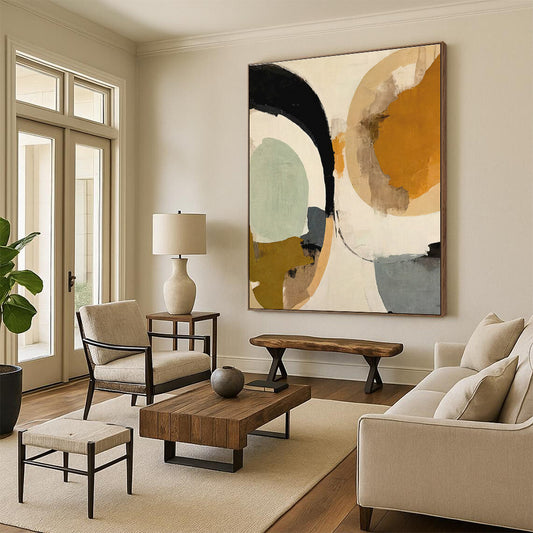
How to Buy Textured Wall Art That Still Reads From Across the Room
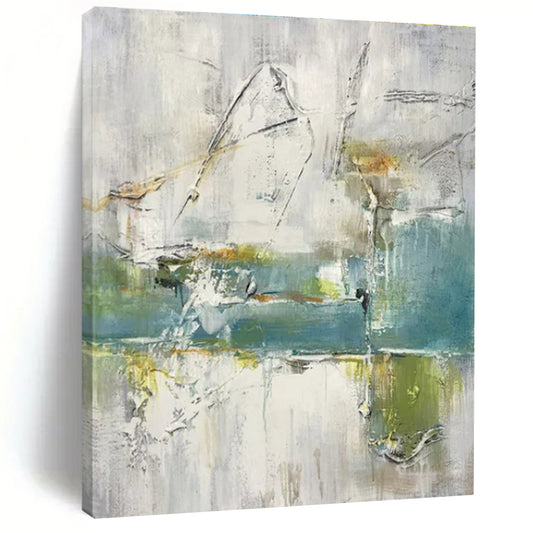
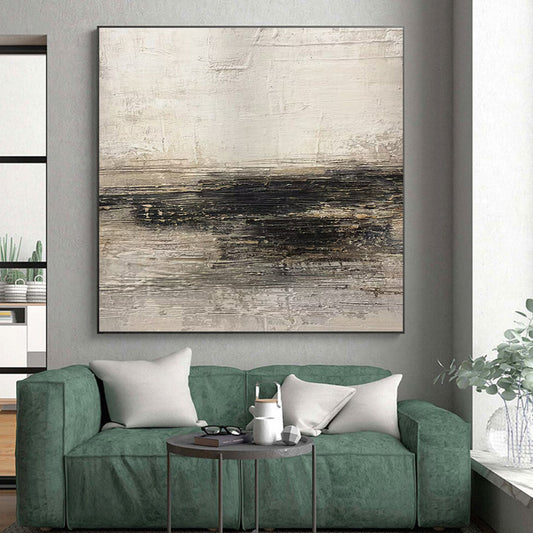
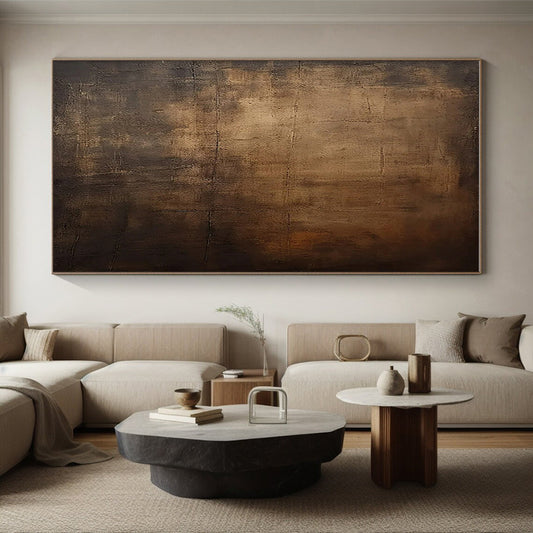
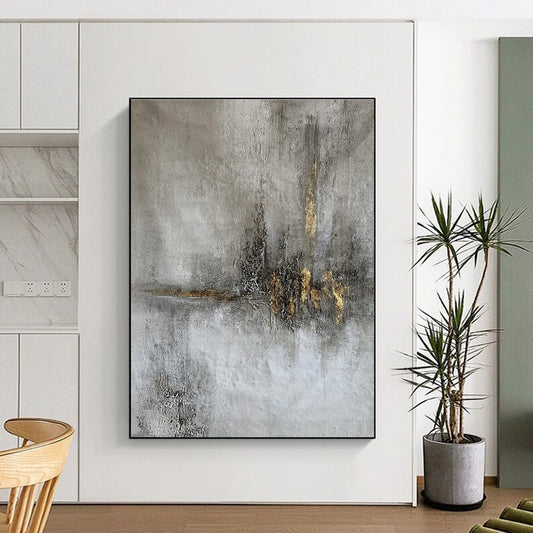
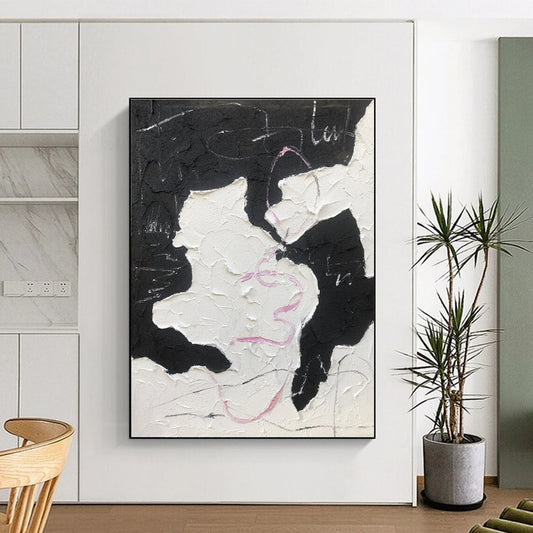
Textured wall art is not a flat picture with a “texture filter.” It is paint, plaster-like medium, or knife-built ridges that stand off the canvas so light can travel across them. From ten feet you should read color and mass. From three feet you should see the surface: peaks, troughs, and the mark of a tool. If both distances look the same, you are looking at a print.
That surface is the reason to buy Textured Wall Art instead of a smooth abstract. Rooms full of drywall, glass, and flat screens need one object that changes between noon and evening. A thick canvas does that work without adding a landscape or a slogan.
What “textured” actually means on a canvas
Painters have a precise word for built-up paint. Wikipedia’s entry on impasto describes paint laid on thickly enough that the brush or knife stroke stays visible—the paint appears to come out of the canvas. Oil holds a ridge because it dries slowly. Heavy-body acrylic and modeling paste can do the same when the studio wants faster drying and a more sculptural crust.
Tate’s glossary on impasto is useful here: in modern painting the surface is not only a window onto a scene. The texture itself is part of the picture. A knife ridge is not decoration on top of the image. It is the image.
Some studios push further and mix sand, grit, or plaster-like fillers into the paint. Tate calls that family of work matter painting—thick paint plus other materials so the wall reads closer to relief than to a poster. You do not need museum language to shop. You only need to decide how much shadow you want in the room.
A practical range:
- Low relief: soft ridges, scumbled color, still easy under a spotlight.
- Mid relief: clear knife tracks; the wall changes when you walk past.
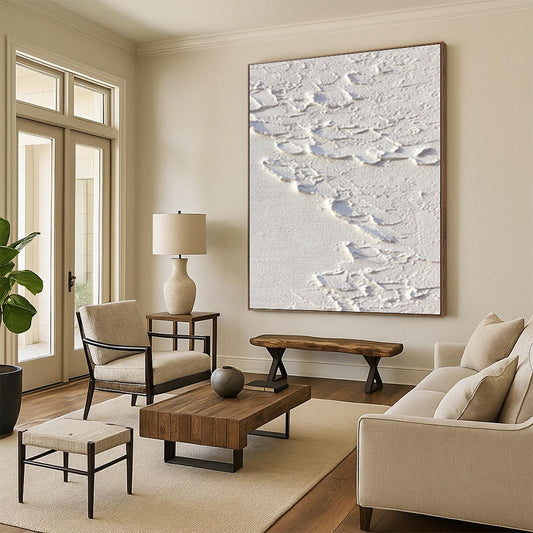
- High relief: plaster-like peaks. Ask whether the piece ships rolled or stretched. Deep texture does not always survive a tight tube.
How to choose a textured canvas painting for a real wall
Start with light, not with a thumbnail. Side light (a window or a picture light at an angle) makes texture earn its keep. A lamp pointed straight at the canvas turns every white peak into glare. North light cools thick whites toward gray. Warm bulbs pull beige toward gold.
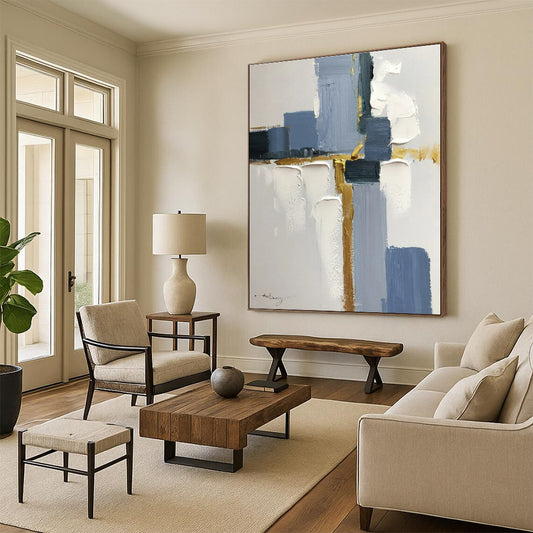
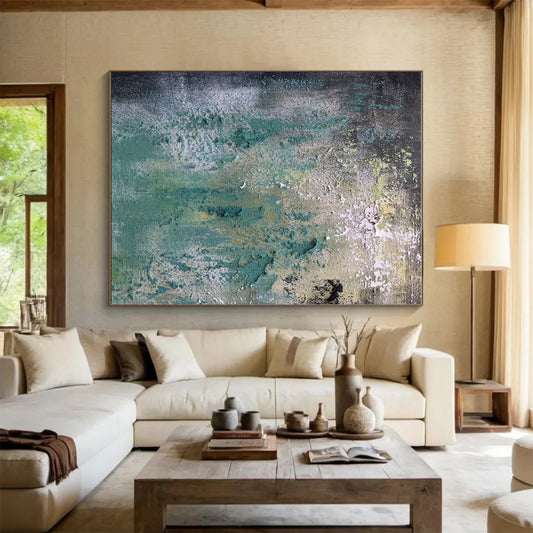
Then decide how much “object” the room can take. A pale, empty wall can hold clearer peaks and stronger contrast. A bedroom or an office on camera usually needs mid values and lower gloss so the surface does not flare. Oak and linen sit with clay, sand, and warm white. Gray sofas sit with plaster, ash, and muted teal. Do not match the painting to a single throw pillow. Share a temperature.
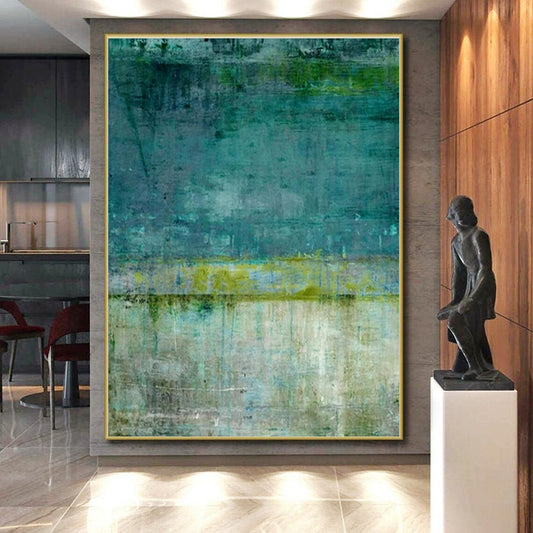
Color in textured work behaves differently than color in a print. A printed teal field stays teal. A knifed teal field breaks into darker troughs and lighter scrapes. If you need the wall quieter, ask for less white on the ridges and more gray in the ground—not a smaller painting.
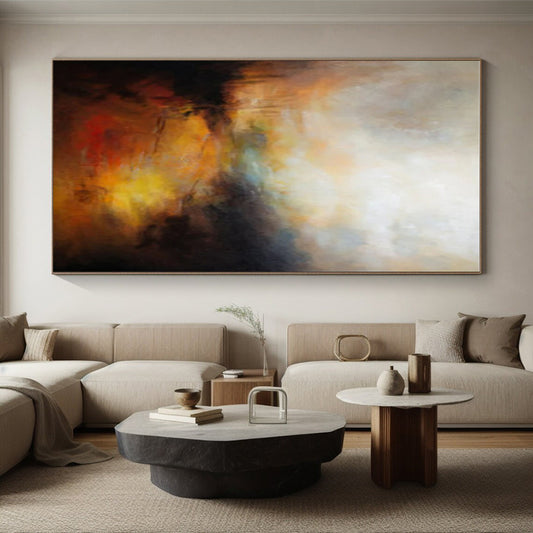
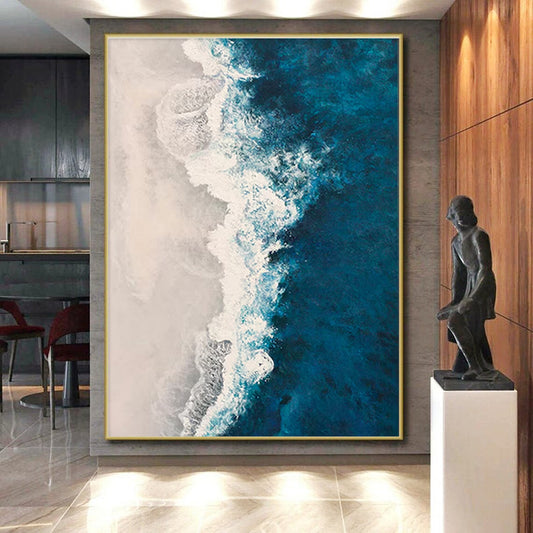
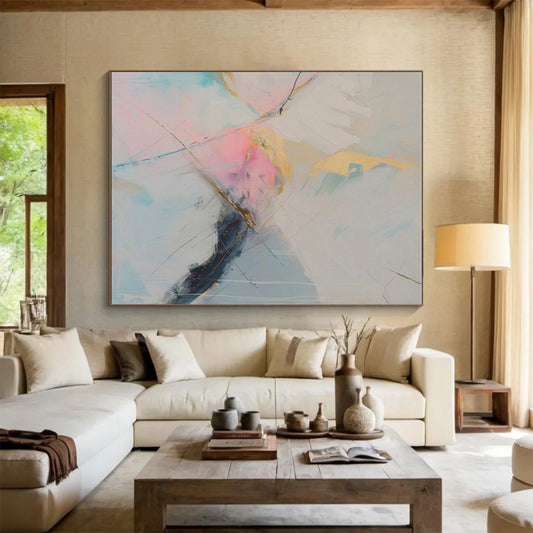
Format follows the empty rectangle, not the SKU grid. A wide seating wall wants a horizontal field so the ridges read as weather, not as a postage stamp. A narrow wall or unused height can take a vertical slab of texture. Square formats suit alcoves and hallways where you pass close enough to see the surface.
Handmade texture versus a textured print
Many listings use “textured” for a photograph of texture printed on canvas. The photo can look convincing on a phone. On the wall it stays optically flat. Real textured canvas painting shifts as you walk: a highlight moves along a ridge; a trough stays matte.
When you compare listings, look for:
- Close shots taken at an angle, not only head-on.
- Visible knife or trowel tracks that do not repeat like a pattern tile.
- A note that the piece is painted to order in oil or acrylic, not printed.
- Whether it ships rolled (with extra border) or already stretched, especially on high relief.
Canvashi’s Textured Wall Art collection is built as hand-painted work with raised surface—seaside fields, earth slabs, and knife landscapes—sized when you order rather than sold as a single factory drop. Each listing should be read as a language of marks, not as the exact studio original arriving in a crate.
A short buying order
- Stand where you will see the wall most often and notice the light at that hour.
- Decide low, mid, or high relief.
- Choose temperature: warm earth or cooler plaster.
- Measure the empty rectangle and pick horizontal, vertical, or square.
- Send the wall width if you need a custom stretch.
- Approve photos of the finished surface before it ships.
Texture that is too timid on a large wall looks like a sample. Texture that is too aggressive under a spotlight looks like glare. The right 3D textured wall art sits between those two mistakes: enough surface to hold the room, enough control that you can still live with it.
That is the job of a textured canvas painting. Not to imitate a museum label—only to give the wall a surface that still works when the phone is in another room.
What is textured wall art?
It is wall art whose surface is built up—impasto paint, knife ridges, or plaster-like medium—so light and shadow are part of the piece. It is not a flat print of a textured photograph.
How can I tell handmade texture from a print?
Look at an angled close-up. Real paint has uneven edges and ridges that change as you move. A print stays the same from every step.
Will thick texture collect dust?
Light dust sits on peaks the way it sits on a shelf. A soft, dry brush or a low-suction pass handles most rooms. Avoid soaking the surface.
Does deep texture ship rolled?
Low and mid relief often ships rolled in a tube with a white border for stretching. High, plaster-like relief may need to ship stretched. Ask before you order.
What colors work with wood floors and gray furniture?
Oak and walnut sit with clay, sand, olive, and warm white. Gray sofas sit with plaster, ash, and muted blue-green. Icy pure white on high peaks can feel colder than the same value in a warmer mix.
Can I order less contrast or a different size?
Yes. Send the wall measurement and a daytime photo. Ask the studio to keep the same mark language as the listing, with lower peaks or more gray if the room is already bright.