How to Buy Plaster Art That Reads as a Wall, Not a Print
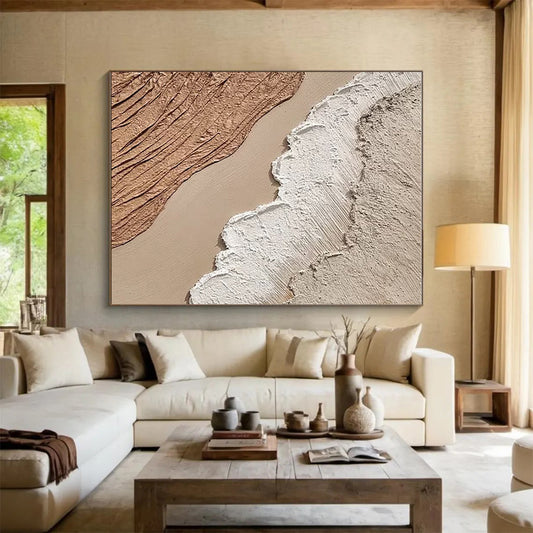
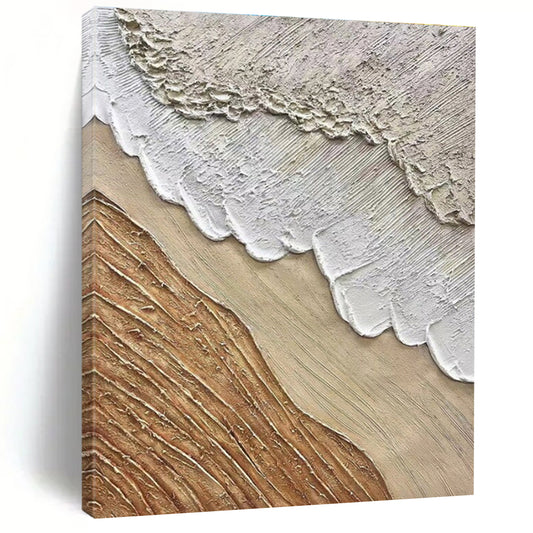
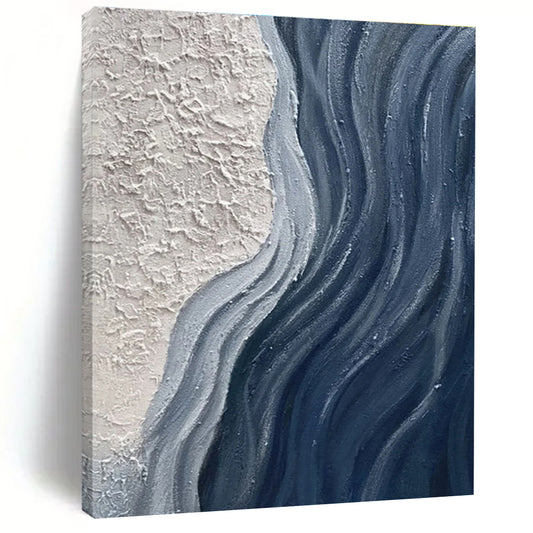
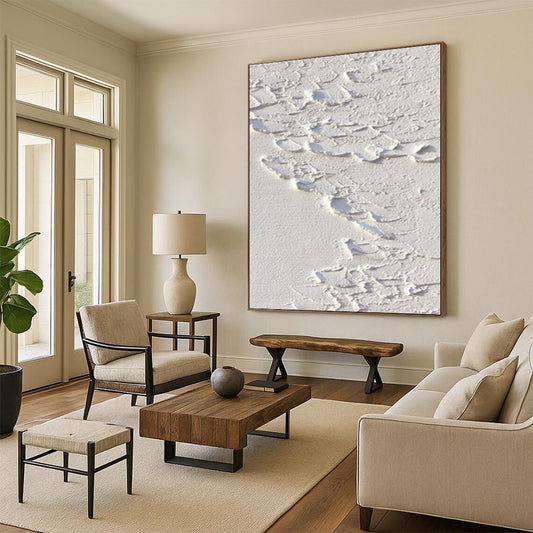
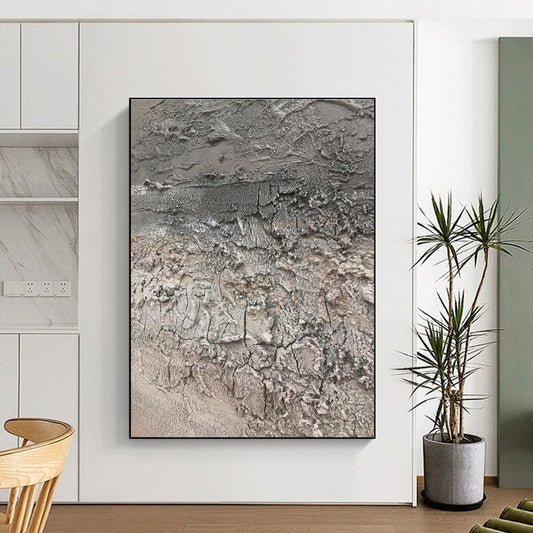
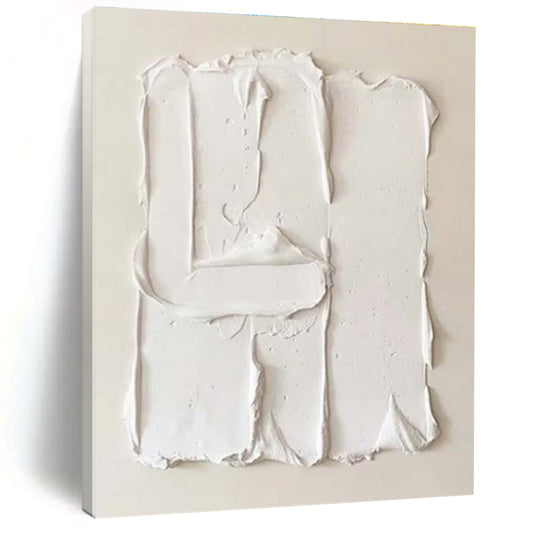
Plaster art is wall work with a built skin: lime, gypsum, or plaster-like paste raised off the canvas so light can catch an edge. It is closer to a shallow relief than to a picture of stone. If the surface looks identical from every angle, you are looking at a photograph of plaster, not the material.
That difference is why Plaster Art belongs in a contemporary room that already has glass, drywall, and flat screens. One object with real depth is enough. You do not need a second scene or a gold frame to finish the wall.
What plaster is doing on a canvas
Plaster began as a building finish and a modeling body, not as a décor filter. Wikipedia’s article on relief is the right first stop: a relief keeps the form attached to a back plane. The mass is raised, not carved fully in the round. Low relief barely leaves the ground. Higher relief throws a harder shadow. Shopping plaster art is the same decision in paint and paste—how far the surface should come forward.
Tate’s glossary on relief says it plainly: a wall-mounted work whose three-dimensional parts rise from a flat base. A plaster canvas is that idea in a livable scale. The “sculpture” is the ridge. The “base” is the field of beige, clay, ash, or quiet black.
The Met’s essay on Roman stuccowork is useful even if you are not buying antiquity. Roman interiors used lime or gypsum mixed with sand, modeled or molded so walls and ceilings caught light and shade. The point was not a souvenir figure. It was a surface that changed as you moved through the room. Contemporary plaster painting borrows that habit: earth planes, broken horizons, and quiet geometry with a crust you can see from the sofa and from three feet away.
A working range:
- Low plaster: soft scrapes and thin skins. Easy under a spotlight; reads as climate more than object.
- Mid plaster: clear trowel tracks and layered slabs. The usual living-room choice.
- High plaster: peaks that behave like small architecture. Ask whether the piece can ship rolled. Deep relief often needs to travel stretched.
How to choose plaster art for a real interior
Start with light. Side light—window or a picture lamp at an angle—makes plaster earn its keep. A lamp aimed straight at white peaks turns every ridge into glare. North light cools plaster toward gray. Warm bulbs pull sand toward gold.
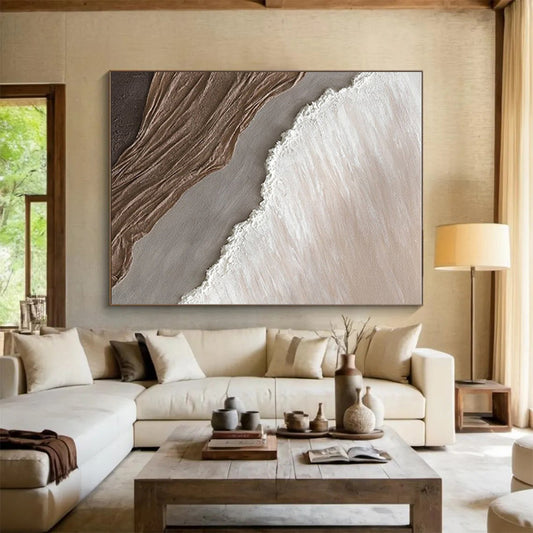
Then choose temperature, not a thumbnail color name. Oak and walnut sit with clay, raw umber, warm white, and muted rust. Gray sofas and stone floors sit with ash, plaster pink-gray, and broken white. A west window already supplies heat; a cooler, grayer crust is often easier on that wall than another cream blaze.
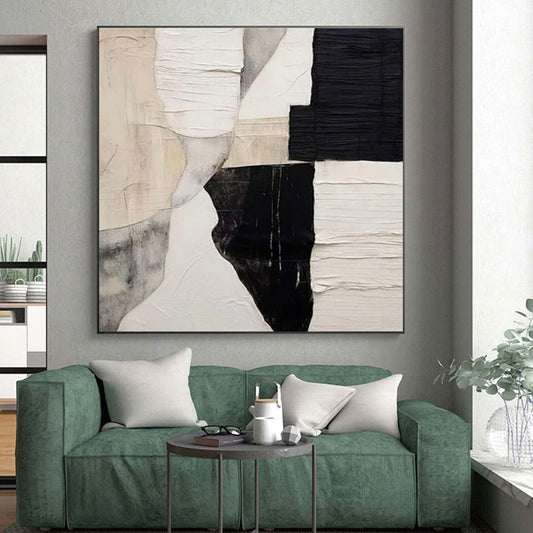
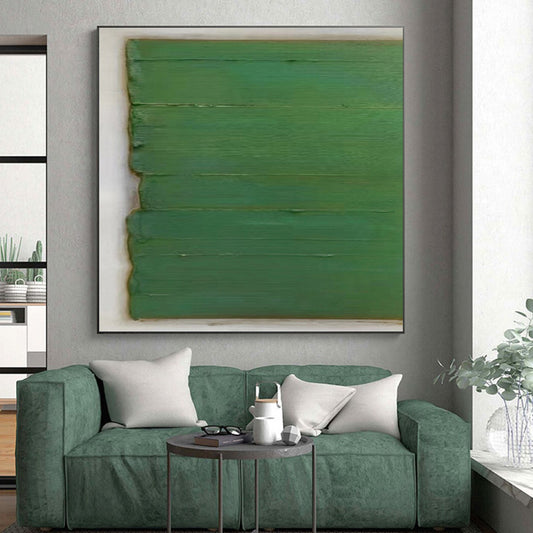
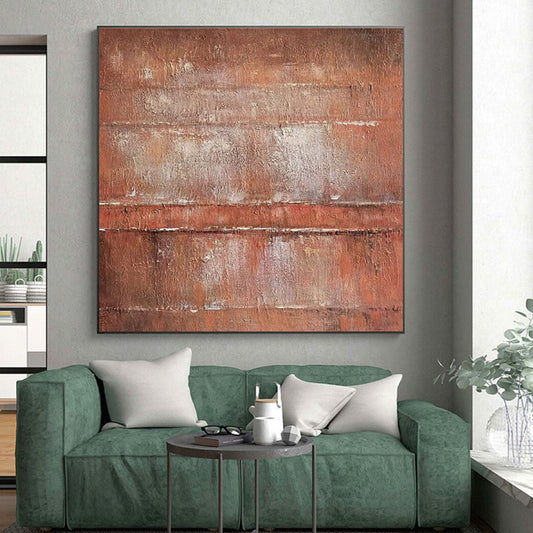
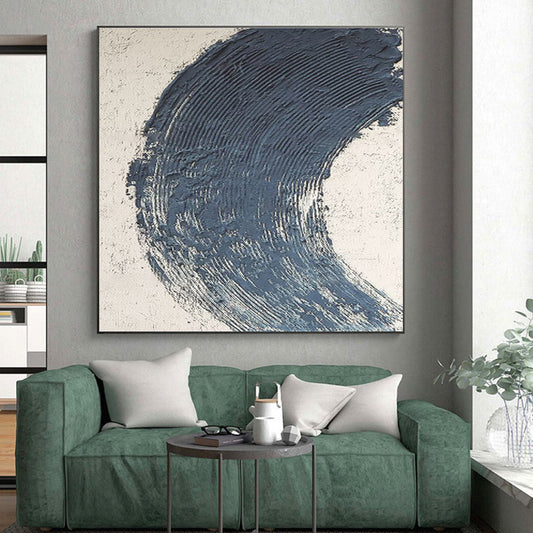
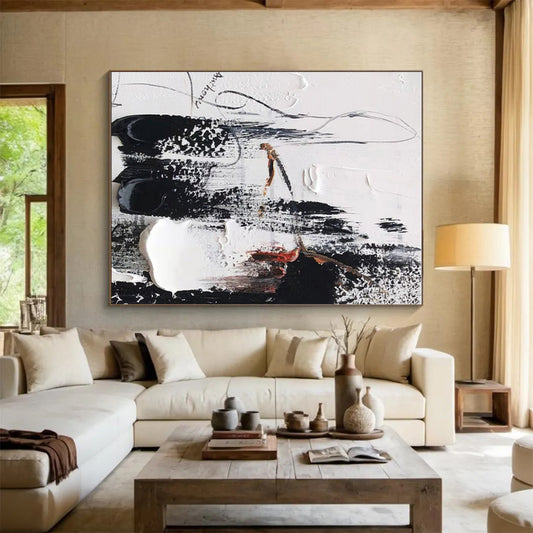
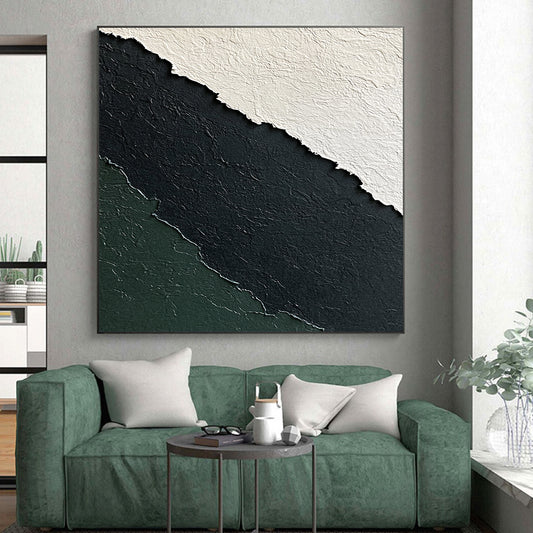
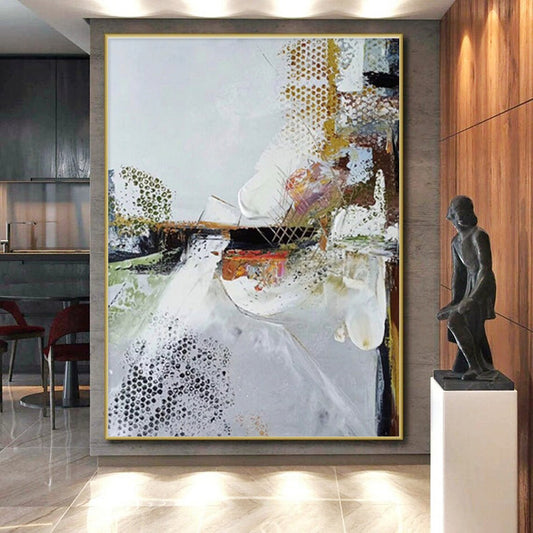
Decide how much subject you will allow. Plaster that still wants to be a mountain range with cabins is a landscape wearing a thick coat. Plaster that keeps only mass and weather—stacked earth, a split between ground and sky, a quiet slab—sits with modern furniture. Canvashi’s plaster pieces often live in that middle: beige-brown-white layers, black-and-white skins, textured fields without souvenir props.
Format follows the empty rectangle. A long seating wall wants a horizontal slab so the ridges read as geology, not as a sample tile. Unused height can take a vertical panel. Square formats suit hallways you pass at arm’s length. Measure first. Do not buy the grid and hope the leftover wall “looks gallery.”
Weight and hanging are part of the purchase. Mid and high plaster is heavier than a printed canvas of the same size. Use wall anchors suited to drywall or plaster, not a single pin. If the work ships rolled, the extra border is for stretching or framing locally; the relief should be low enough that a tube will not crush it.
Handmade plaster versus a textured print
Many listings use “plaster art” for a photo of cracked earth printed on canvas. It can look convincing on a phone. On the wall it stays optically flat. Real plaster-like painting shifts: a highlight runs along a trowel edge; a trough stays matte.
When you compare pieces, look for:
- Close shots taken at an angle, not only head-on.
- Uneven skins that do not repeat like a pattern stamp.
- A note that the surface is built in plaster-like medium, heavy acrylic, or mixed paste—not a printed texture.
- Custom size, and whether shipping is rolled or already stretched.
These canvases are painted and built to order in the language of the listing photos. Approve images of the finished surface before anything leaves the studio. If the room is already bright, ask for lower peaks and more gray in the ground—not a smaller painting.
A short buying order
- Stand where you will see the wall most often and notice the light at that hour.
- Choose low, mid, or high relief.
- Match temperature to wood, stone, and upholstery.
- Measure the empty rectangle; pick horizontal, vertical, or square.
- Confirm rolled versus stretched shipping if the crust is deep.
- Review photos of the finished surface before it ships.
Plaster art that is too timid on a long wall looks like a sample board. Plaster that is too aggressive under a downlight looks like glare. The right piece sits between those mistakes: enough mass to hold the room, enough quiet to live with every day.
What is plaster art?
Wall art whose surface is built with plaster, gypsum, lime-like paste, or heavy modeling medium so the canvas reads as shallow relief. It is not a flat print of cracked earth.
How is plaster art different from ordinary textured paint?
Texture can be a thin knife ridge in paint. Plaster art usually has a denser, more architectural skin—slabs and trowel planes that throw a harder shadow.
Will high plaster collect dust or crack?
Light dust sits on peaks. A dry, soft brush is enough in most rooms. Avoid soaking the surface. Hairline variation is part of a built skin; ask the studio about flexibility if the piece must ship rolled.
Can plaster art ship in a tube?
Low and mid relief often can, with a white border for stretching. High, brittle peaks usually need to ship stretched. Confirm before you order.
What colors sit with oak floors and gray furniture?
Oak sits with clay, sand, and warm white. Gray furniture sits with ash, plaster gray, and broken white. Icy pure white on high peaks can feel colder than the same value in a warmer mix.
Can I order a custom size or a quieter surface?
Yes. Send the wall width and a daytime photo. Ask to keep the same slab language as the listing, with lower relief or more gray if the room is already bright. Approve photos before shipping.