How to Choose Abstract Line Art That Moves Across a Wall Without Crowding It
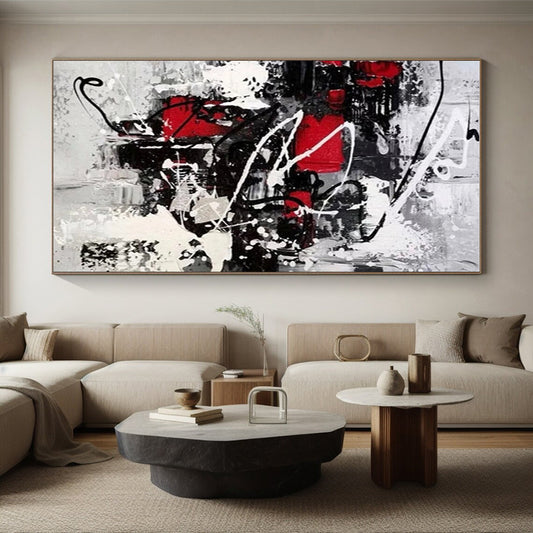
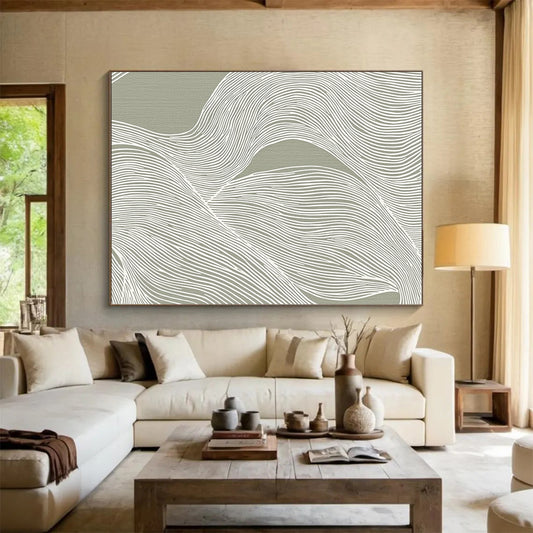
A line is the thinnest way to hold a room. One dark path across beige can do more than a field of color. A tangle of lines can also do less: it can look like a sketch left unfinished. This guide is for hand-painted Abstract Line Art on oversized canvas—flowing gray-and-white paths, black-and-beige minimalist marks, geometric line grids, and faster multicolor tracks—not for small prints of single-line faces.
What a line is doing when it is the whole painting
Wassily Kandinsky treated line as a force with direction and temperature: a horizontal rests, a diagonal climbs, a curve lives. He set that out in Point and Line to Plane (1926) after years of turning marks into structure. Half a century later, Cy Twombly’s Untitled (1970) in the collection of The Museum of Modern Art took the opposite tone: looping crayon on a gray ground, like writing that never becomes a word. Abstract art keeps both options open. Line can be architecture, or it can be handwriting.
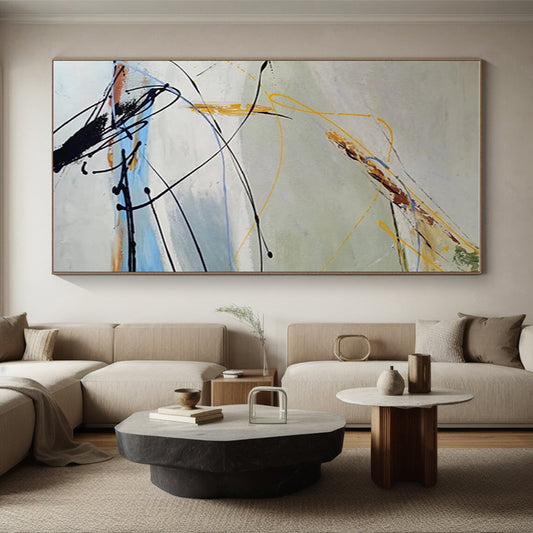
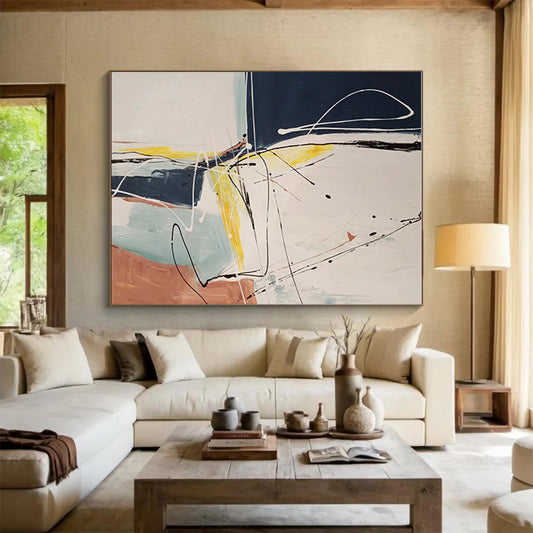
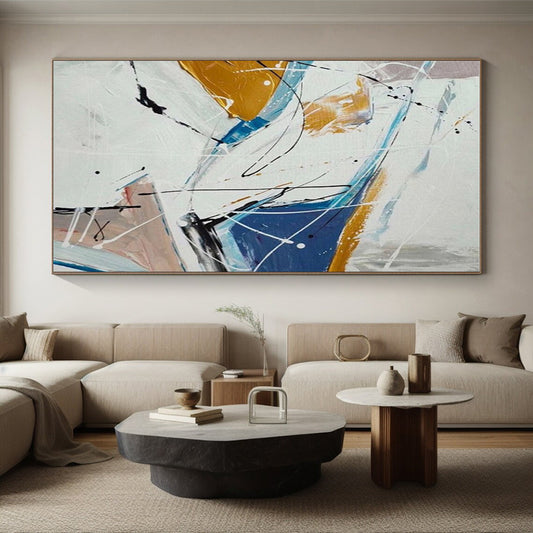
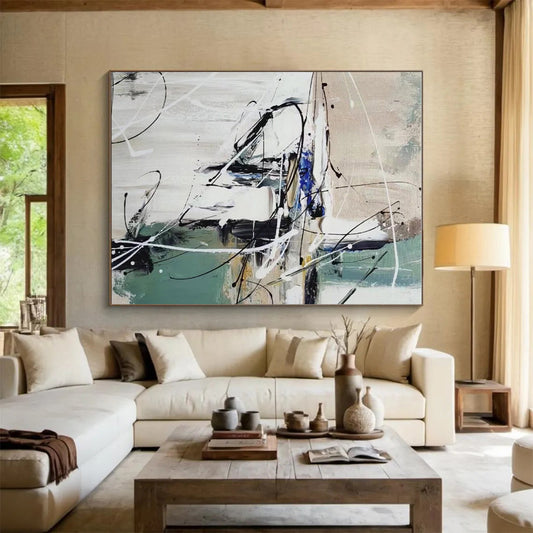
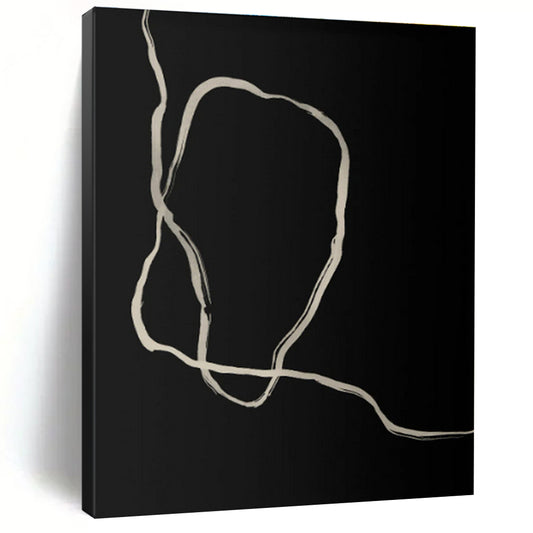
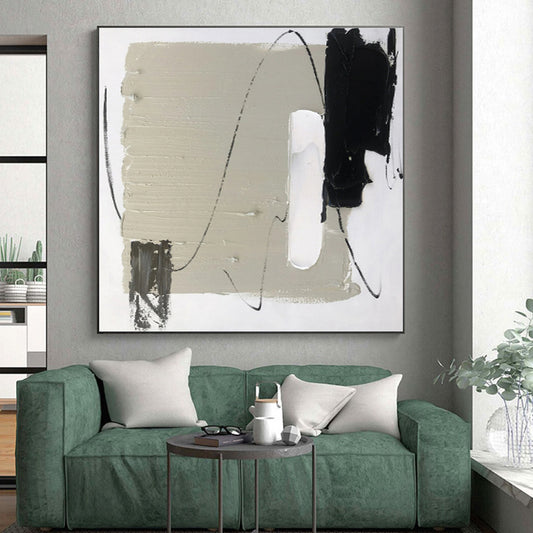
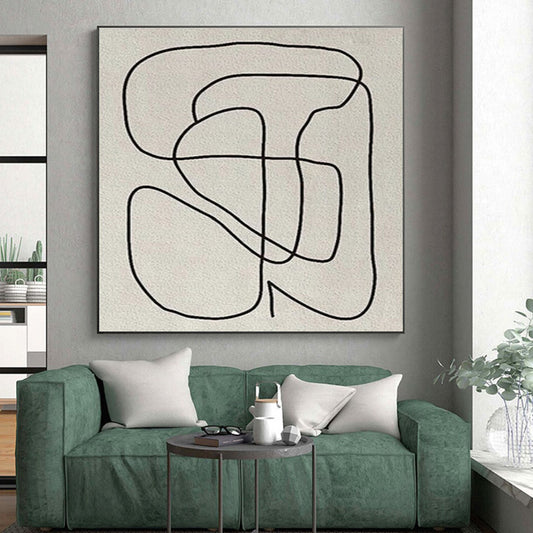
That split is the buying decision. Geometric line art—black, white, and gray tracks that meet at right angles—organizes a wall the way a grid organizes a page. Gestural line art—sketchy black on beige, circular beige-green paths, navy-yellow-coral sweeps—gives the wall a tempo. If the room already has pattern, choose fewer lines and more space. If the room is quiet and pale, a single dark path is usually enough.
Read the line before you read the color
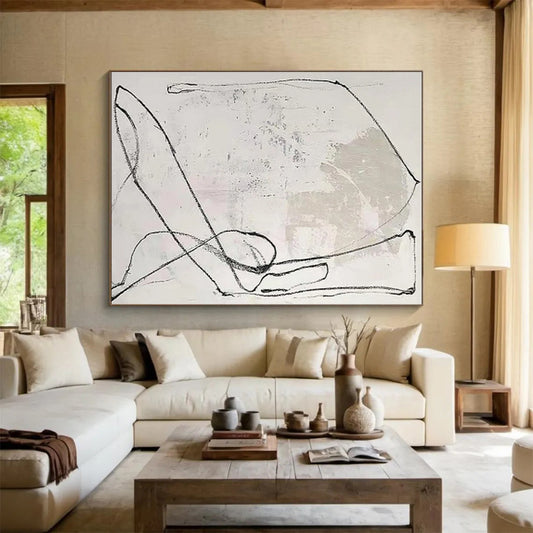
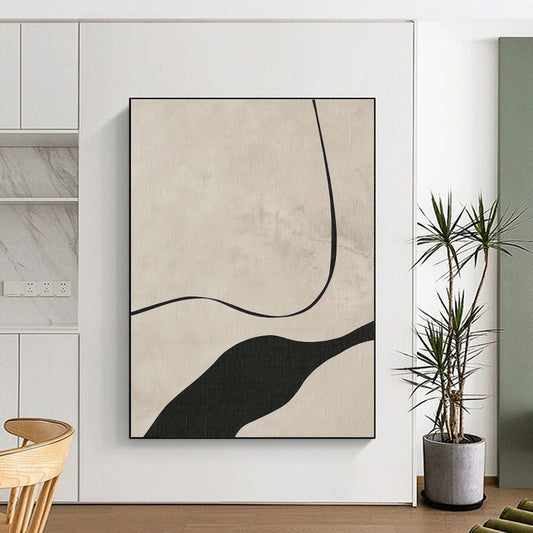
- One or two dark lines on beige, gray, or white are the most livable. They suit bedrooms, hallways, and rooms with busy furniture.
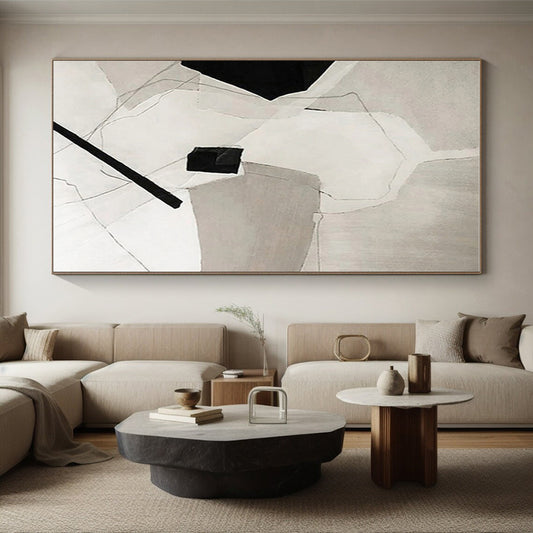
- Black, white, and gray geometric lines belong in offices, dining rooms, and modern living rooms with clean sofas. They fight checked rugs.
- Flowing gray-and-white paths are the softest oversized option. They work above a light sofa without adding a new hue.
- Dynamic color lines—black with yellow and blue, navy with coral, blue with orange—need a neutral wall. They are closer to music than to furniture.
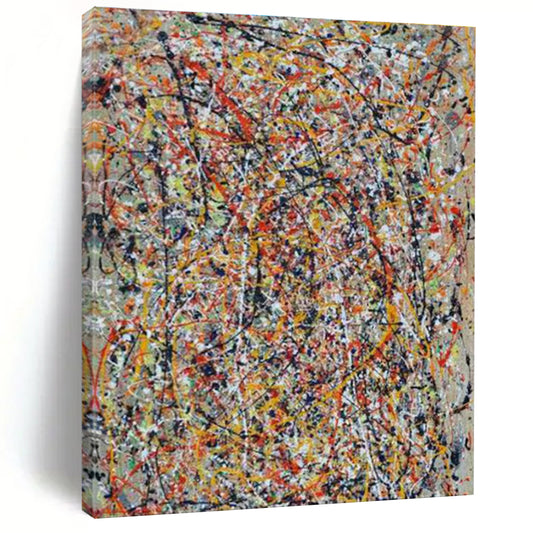
- Dense chaotic lines and dots are studio pictures. Hang them where you can step back. Up close they can look unfinished; from across the room they can look like weather.
Ask how much of the canvas is empty. Empty is not a defect in this category. The space around the line is what keeps the work from reading as a scribble.
Pairings and rooms
Black and beige is the quiet luxury mix and sits next to oak, linen, and stone. Black, white, and gray is sharper and takes a slim black frame or none. Blue or green with beige lines cools a warm room. High-chroma line paintings belong on a dining wall or in an office that can take alertness. They are a weak choice for the wall you face in bed unless the color is only a thin track through neutrals.
Match the direction of the line to the architecture. A long horizontal flow settles a sofa. A tall vertical path suits the strip between windows. Circular line compositions work over a console or fireplace. Geometric line grids want a rectangular wall and a rectangular piece of furniture under them. Oversized single canvases serve high ceilings better than a cluster of small line drawings, which can look like notes pinned up.
Neutral walls help. Warm white, greige, clay, and charcoal let the mark register. A wall already full of family photos does not need a dense line painting; the two kinds of mark will compete.
Size, distance, and surface
Above a sofa, bed, or console, aim for about 60–75 percent of the furniture width. A 90-inch sofa wants a canvas roughly 54–68 inches wide. Leave 6–8 inches between the furniture and the work. On an empty wall, keep the visual center near 57–60 inches from the floor.
Line art changes with viewing distance. A thin black path that looks elegant from eight feet can disappear from twenty. A thick gestural track that looks rough from two feet can look decisive from across the room. If the canvas hangs in a hallway where you pass close, choose fewer, thicker lines and visible paint. If it hangs opposite a sofa, thinner lines can hold.
That is the case for hand-painted line work. A print can copy the path. It rarely copies the pressure: the skip, the ridge, the place where the brush slowed. Those accidents keep a line from looking like a vector file.
Light, framing, and a short checklist
Warm, dimmable light (about 2700–3000K) keeps beige grounds from going gray and keeps colored lines from going neon. Cool overhead LEDs flatten black-and-white line work into signage. Gallery wrap with painted sides is the cleanest look. If you frame, use a slim float frame in black, oak, or white that repeats a color already on the canvas. A heavy gilt frame adds a second drawing around the first.
Dust with a dry cloth. Keep the work out of damp and out of hard, all-day sun. Measure the furniture first. Decide whether the line should organize the room or animate it. Then stop adding other linear objects to the same view—no second set of striped pillows against a striped canvas.
What rooms work best for abstract line art?
Bedrooms and hallways take one or two dark lines on beige or gray. Offices and modern living rooms take geometric black-white-gray lines. Dining rooms can take colored dynamic lines. Avoid dense chaotic line fields in a small, already busy room.
Is abstract line art too minimal?
Only if the canvas is mostly empty and the furniture is also empty. A single strong line above a solid sofa is usually enough. If the room feels blank, choose a composition with more overlapping tracks, not more furniture pattern.
What colors pair with line-based paintings?
Black, white, beige, and gray are the most flexible. Blue or green cools the mark. Yellow, coral, and orange raise the energy and should stay in the minority. Let the wall stay quieter than the line.
What size line painting should I hang above a sofa?
Use 60–75 percent of the sofa width and leave 6–8 inches above the back cushions. One oversized canvas usually looks more finished than several small line prints.
Is hand-painted line art better than a print?
Yes if you will see the work up close. A print can copy the route of the line. Hand-painted pressure, skips, and ridges are what keep the mark from looking like a graphic.