How to Choose Minimalism Visual Art That Stays Quiet on Purpose
Minimal painting is easy to fake and hard to live with. A beige rectangle with one polite line can look “calm” on a phone and empty on the wall. Real reduction still has a decision in it: a band that holds, a field that does not collapse, a value shift you can read from across the room. If the canvas only looks unfinished, it is not minimal. It is unfinished.
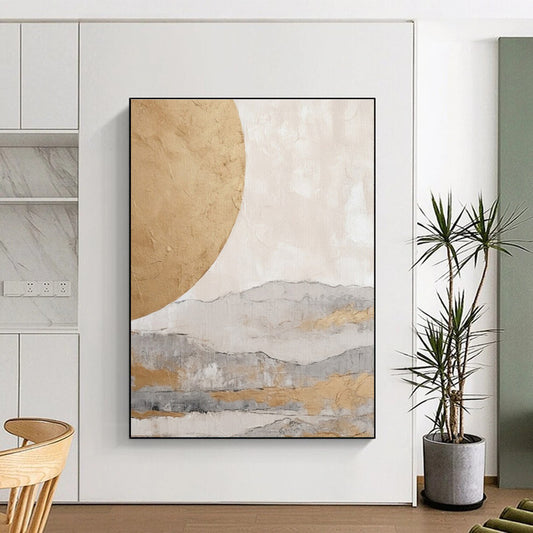
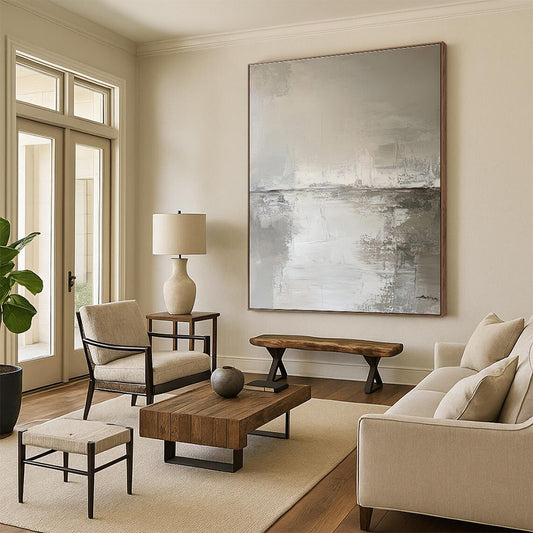
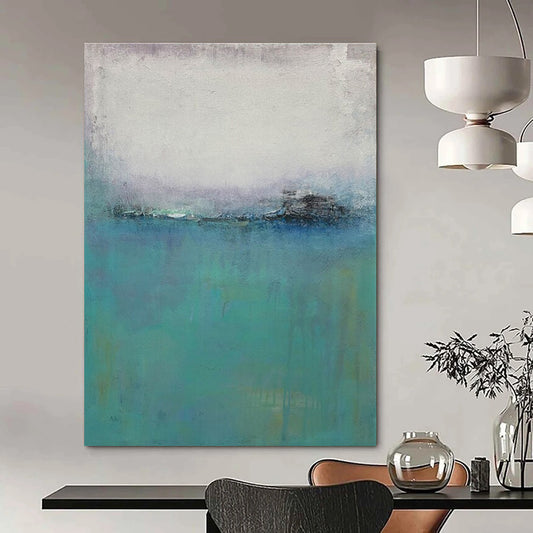
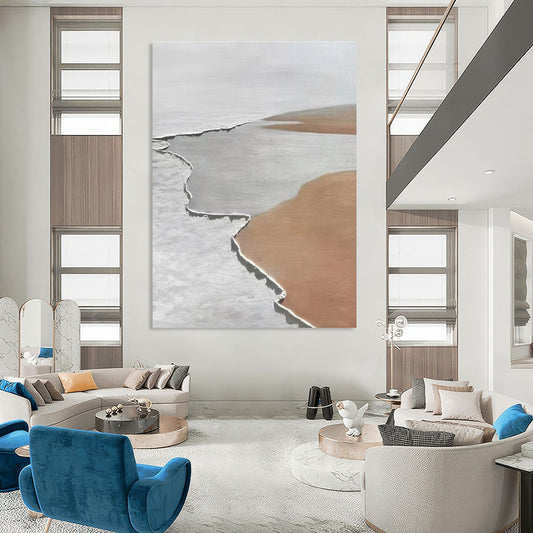
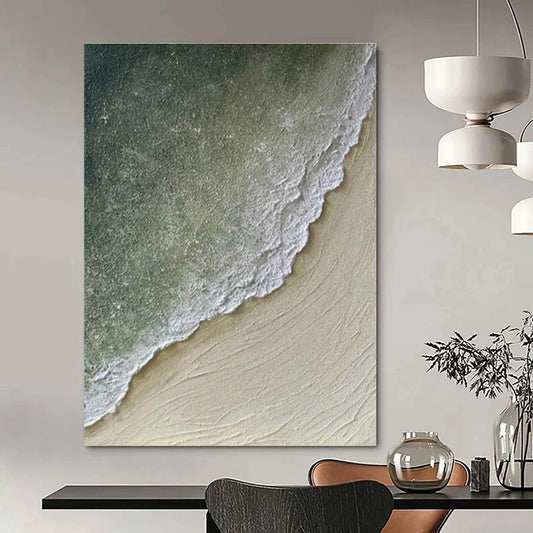
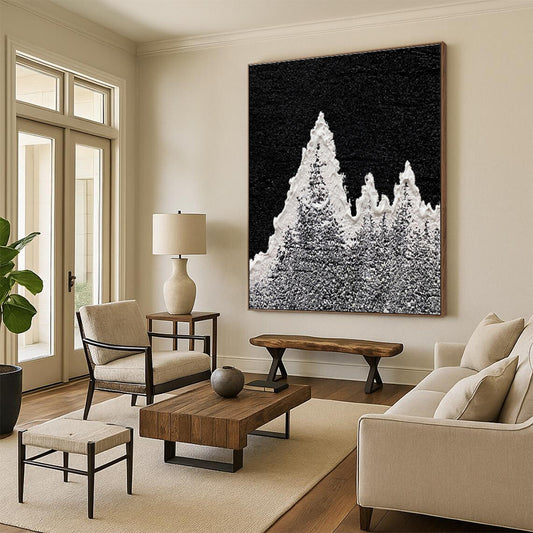
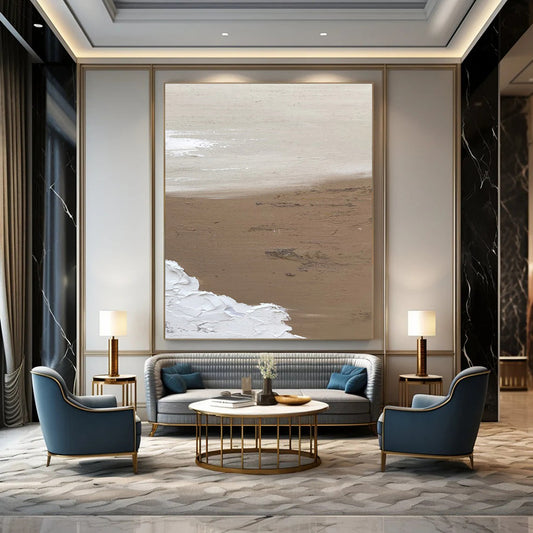
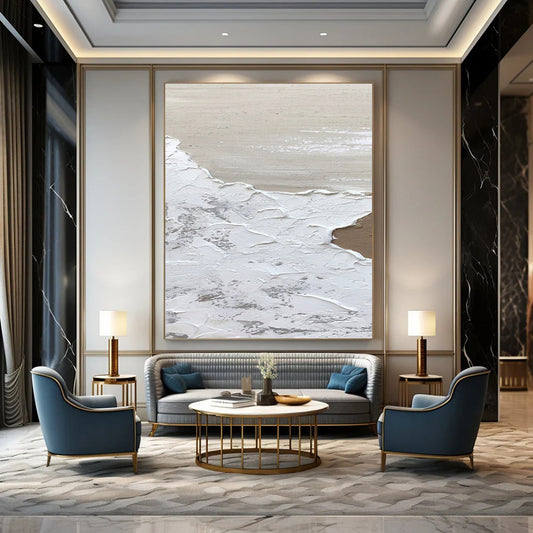
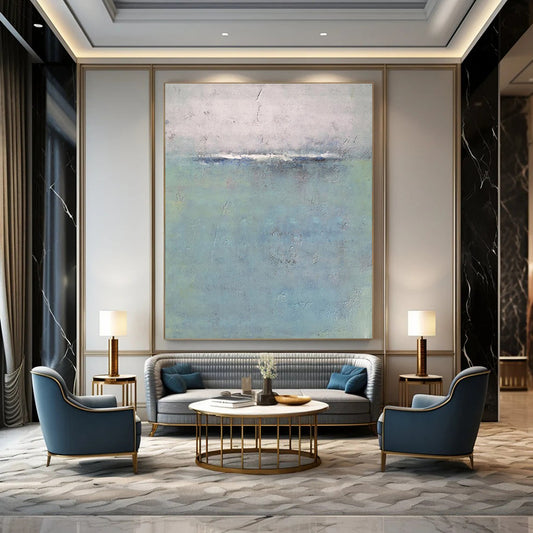
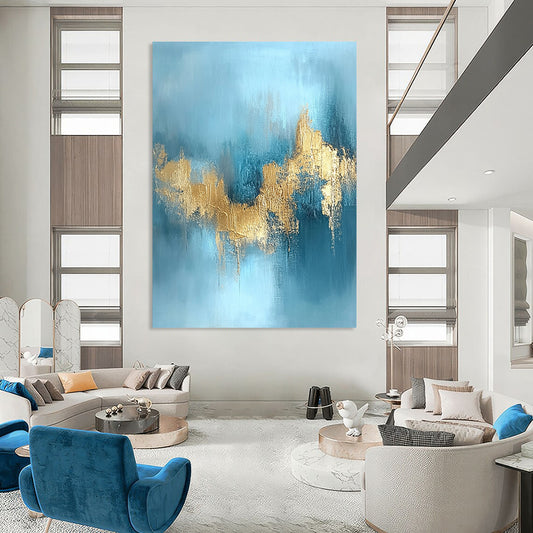
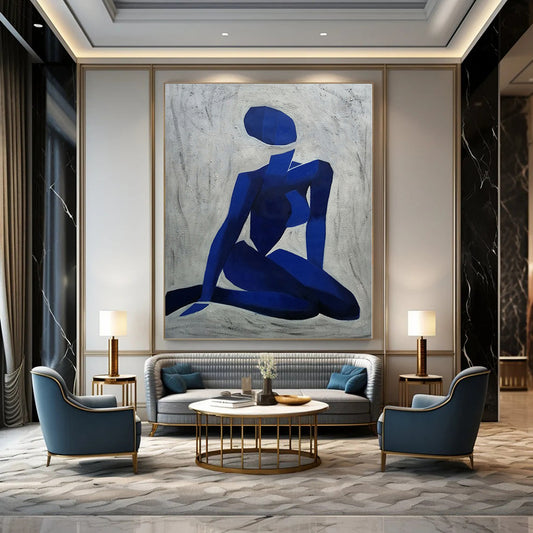
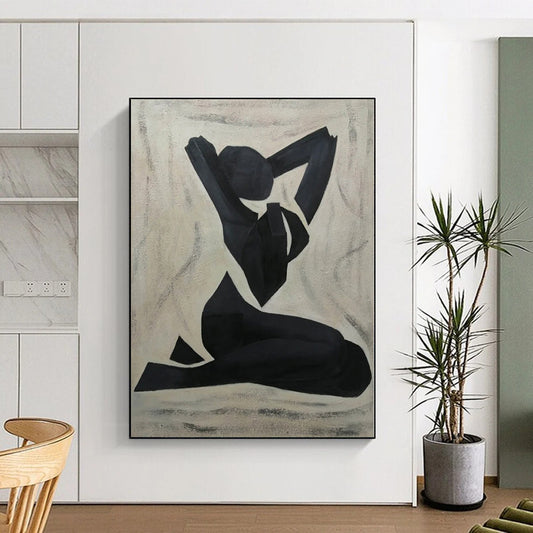
Minimalism Visual Art in this shop means hand-painted canvases that keep few elements—neutral fields, a single circle or horizon, gray water, quiet geometry—and paint them large enough that the silence has weight. It is not a print of an empty room.
What the word actually names
Wikipedia’s page on Minimalism (visual arts) places the movement in postwar American art: strip the work to what is essential, often as a reply to the drama of abstract expressionism. Geometry, repetition, and a surface that does not pretend to be a window. Artists argued over the label. The shopping test is simpler. If you remove one more mark, does the wall still hold—or does it go blank?
Tate’s glossary on Minimalism is the sentence worth keeping: the viewer is asked to respond to what is in front of them, not to a story behind it. Frank Stella’s line still applies in a living room. What you see is what you see. A gold circle on gray sand is either a precise object or a sticker. There is no third option.
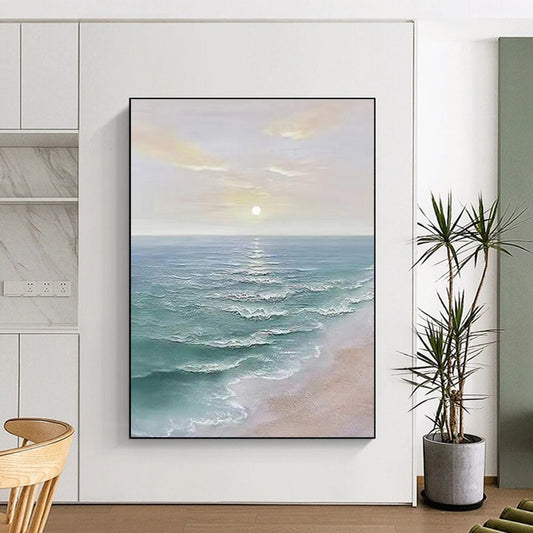
Tate’s note on non-objective art helps when a listing still hints at tide or mist. Non-objective work does not owe you a coastline. Geometric planes and simple forms can stand for clarity rather than for a place. A “minimal seascape” that still needs a caption is a landscape on a diet. A field that only keeps temperature—gray, bone, a cooler white—is closer to the brief.
You do not need museum hardware. You need to decide how much event the room can take. One horizon. One circle. Two values. That is usually enough.
How to match a quiet canvas to a real room
Minimal work fails in two opposite ways. It disappears on a white wall because the values are too close. Or it looks severe because the whites are icy and the furniture is already pale. Start with temperature, not with the word “neutral.”
Oak and walnut need warmth in the field: sand, clay, raw linen, a cream that is not optical brightener. Gray sofas and stone floors can take ash, cool plaster, and broken white. A west window already throws heat; a slightly cooler plane is often easier than another vanilla slab. Do not match a single cushion.
Then look at the furniture’s noise. Busy weaving, open shelves, and patterned rugs want fewer marks on the canvas. A spare room can take a stronger band or a single geometric event. Offices and bedrooms on camera need mid values and low gloss so the field does not flare.
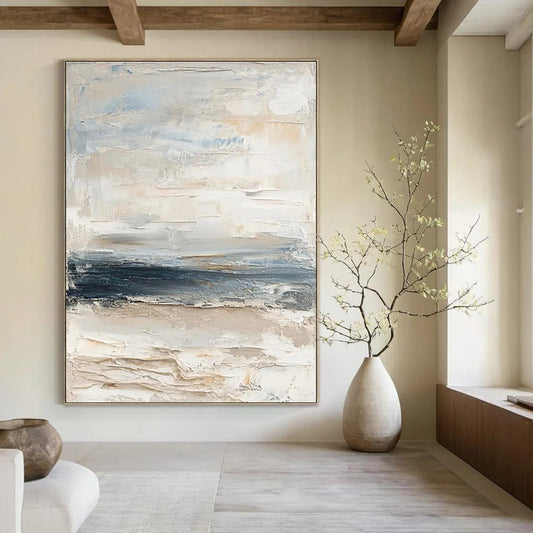
Light is part of the composition. Side light shows a thin ridge or a scumbled edge. A downlight on a high white plane turns “simple” into glare. If the listing shows thick texture, treat it as a second decision: a little skin can keep minimal work from reading as a printed panel; a heavy crust can fight the brevity you came for.
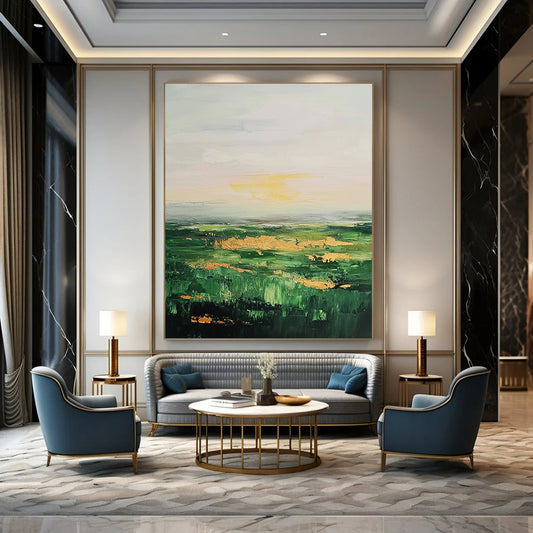
Format still follows the empty rectangle. A long seating wall wants a horizontal field so the few marks read as architecture. Unused height can take a vertical plane. Square formats suit alcoves you pass close. Measure the span. A tiny minimal canvas on a long wall looks like a sample chip.
Handmade quiet versus a minimal print
Printed minimalism is a flat fill with a sharp edge. Hand-painted quiet work still has a human tolerance: a band that is not perfectly taped, a wash that breathes, a circle whose edge is painted rather than die-cut. That slight irregularity is what keeps the wall from looking like a slide.
When you compare listings, look for:
- Value shifts inside the “empty” field, not one digital beige.
- An edge that was made, not clipped.
- Angled close shots if any surface is built.
- Oil or acrylic on canvas, painted to order, not a poster of a spa.
These canvases are made in the language of the photos—gray-white water, beige-gray land, a gold ring on a still field—not shipped as the exact studio original. Ask for less contrast if the room is already bright. Ask for a warmer ground if the floor is oak. Approve images before the work ships.
A short buying order
- Decide the one event the wall is allowed: field, band, horizon, or a single form.
- Match temperature to wood, stone, and light.
- Measure the empty rectangle; pick horizontal, vertical, or square.
- Check sheen against lamps and any camera angle.
- Send a width if standard sizes miss.
- Review photos of the finished surface before shipping.
Minimalism visual art is not less work. It is fewer decisions, each one visible. The right canvas leaves the room alone—and still finishes the wall.
What is minimalism visual art?
Visual art that keeps only what the wall needs: field, edge, and a small number of forms. It does not illustrate a scene. If the canvas still requires a caption, it is not doing minimal work.
Is minimal the same as blank beige?
No. A blank fill is an empty product. Minimal work has a structure you can name—a band, a split, a circle, a value change—even when the palette stays quiet.
Will minimal art look cold in a room with wood?
Not if the whites are warm and the field shares the wood’s temperature. Icy optical white on oak is what feels cold. Sand, clay, and linen-white sit with timber.
Can textured paint still be minimal?
Yes, if the texture is a skin, not a second picture. A low ridge that catches light can keep a quiet field from reading as a print. Heavy narrative texture fights the reduction.
What size works for a seating wall?
Measure the empty span first. A horizontal field that occupies most of that width will read as architecture. A small square in the middle of a long wall will read as a leftover.
Can I order a softer contrast or a custom size?
Yes. Send the wall width and a daytime photo. Ask the studio to keep the same few marks as the listing, with a warmer ground or lower contrast if the room is already bright. Approve photos before shipping.