

7 Modern Abstract Art Placement Ideas for Over Your Sofa
The wall above the sofa is the living room’s natural stage. It is the first surface most people see when they enter, and it sits at the height where conversation happens. A well-chosen piece of Modern Abstract Art can turn that blank expanse into a focal point that ties the entire seating area together. Because abstract work relies on color, shape, and gesture rather than a recognizable subject, it adapts easily to different sofa styles, room palettes, and lighting conditions.
Before choosing a specific arrangement, two measurements matter more than almost anything else. The artwork (or grouping treated as one unit) should span roughly two-thirds to three-quarters of the sofa’s width. A piece that is too narrow looks stranded; one that is too wide can make the furniture appear undersized. Second, leave 6 to 12 inches between the top of the sofa back and the bottom edge of the art. This gap keeps the painting visually connected to the seating rather than floating toward the ceiling. Designers and galleries often also aim for the center of the work to sit near 57–60 inches from the floor, the average standing eye level.
With those proportions in mind, here are seven practical placement ideas.
1. The Single Oversized Statement Canvas
One large horizontal or slightly rectangular painting is the simplest and often the strongest solution. It creates an immediate, uncluttered focal point and requires no decisions about spacing between frames. A canvas in the 48-by-72-inch to 60-by-90-inch range works well above most three-seat sofas. Neutral or softly tonal abstracts recede gracefully in minimalist rooms, while bolder color fields or geometric compositions add energy. Center the piece on the sofa, not necessarily on the entire wall, especially if the furniture is not perfectly centered.
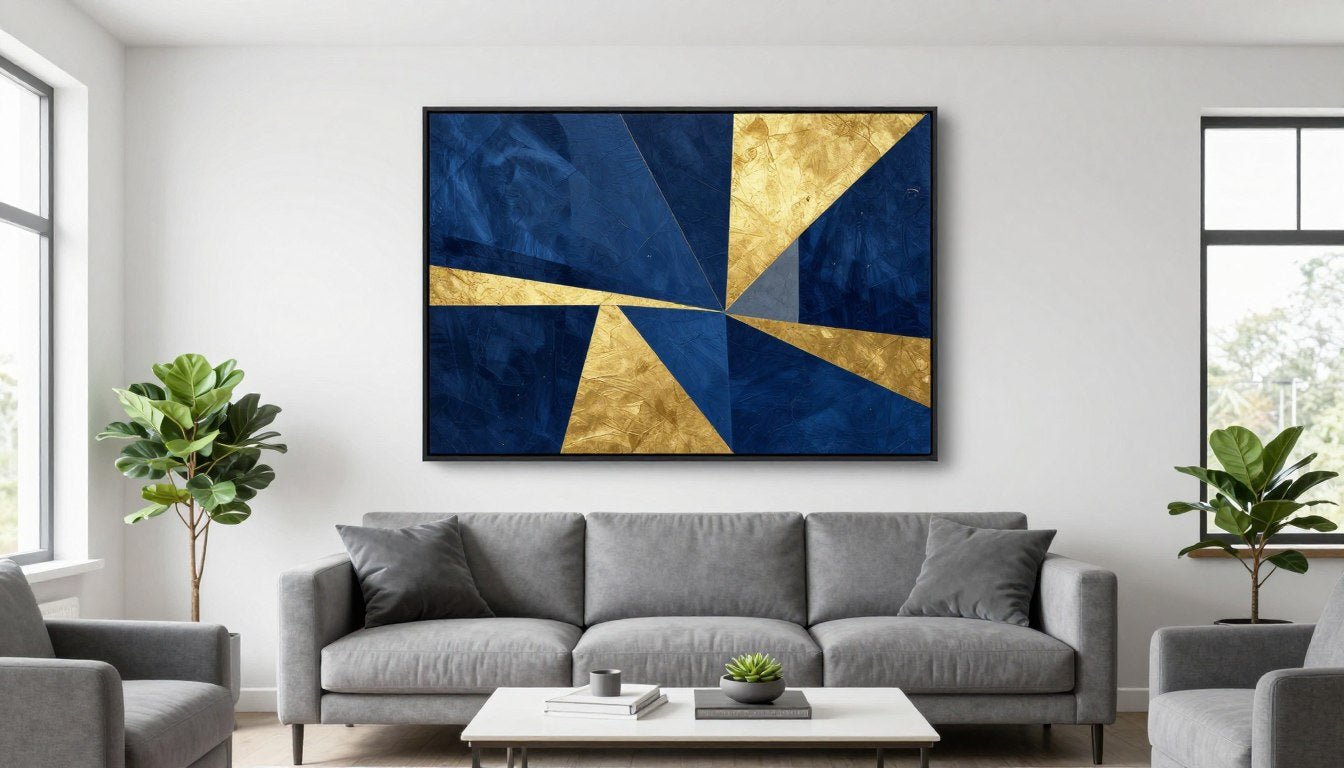
This approach is particularly effective with gallery-wrapped canvases that need no frame, allowing the painted edges to continue the composition.
2. A Wide Panoramic Format
When the sofa is long or the wall is unusually wide, a single extra-wide painting (often 70–90 inches across and relatively shallow in height) mirrors the furniture’s horizontal line. Flowing, horizon-like, or layered compositions reinforce the sense of breadth and can make a room feel more expansive. These pieces work especially well above sectionals because they visually unify the longer seating line.
The same 6–12-inch gap still applies. Because the work is so wide, even a modest height (24–36 inches) is usually sufficient; taller ceilings can accommodate a bit more vertical presence.
3. A Diptych of Two Coordinated Panels
Two canvases of equal size hung side by side with a 2–4-inch gap create rhythm without the complexity of a full gallery wall. The pair can be a continuous composition split across two surfaces or two related but independent abstracts that share a color story. This format is forgiving: if one panel is slightly off-center it still reads as intentional.
Diptychs are useful above sofas that are wider than a single affordable canvas or when you want a sense of movement. Keep the overall width of the two pieces plus the gap within the two-thirds-to-three-quarters rule.

4. A Triptych for Balanced Rhythm
Three panels offer even more flexibility. They can be equal in size or use a larger central canvas flanked by two smaller ones. The arrangement should still function as one visual unit whose total width respects the sofa. Consistent spacing (usually 2–3 inches) and a shared baseline keep the grouping from looking scattered.
Triptychs work well when you want more visual interest than a single canvas but still prefer a structured, contemporary look rather than an organic gallery wall.
5. A Curated Gallery Wall Treated as One Composition
A cluster of smaller abstracts can succeed if the entire grouping is planned as a single rectangle or organic shape whose outer dimensions follow the same width and height guidelines as a large canvas. Mix sizes and orientations, but maintain consistent spacing and a coherent palette or style. One larger “anchor” piece slightly off-center often helps the arrangement feel grounded.
This approach adds personality and allows you to include works of different scales. It requires more planning—tape the arrangement on the wall first—but rewards the effort with a collected, lived-in feel.

6. Slightly Offset or Asymmetrical Placement
Perfect centering is not always necessary. Shifting a single large piece or a pair a few inches to one side can create a more dynamic composition, especially when balanced by a floor lamp, tall plant, or sculptural side table on the opposite end of the sofa. The art still relates to the furniture; it simply shares the visual weight rather than dominating the exact midpoint.
This idea works best in rooms that already have other strong vertical elements and when the painting itself has an internal sense of movement that can tolerate the offset.
7. A Textured or High-Contrast Piece for Light and Depth
Because abstract work often relies on surface quality as much as color, a heavily textured, impasto, or metallic painting changes appearance as daylight or lamps rake across it. Place such a piece where it will receive some raking light—near a window or under a picture light—so the ridges and planes become part of the experience. High-contrast palettes (deep navy and gold, black and cream, or saturated complementary colors) also read clearly from across the room and help the seating area feel intentional even in larger spaces.
A textured work benefits from the same sizing and height rules; the extra physical depth simply makes the 6–12-inch gap even more important so the painting does not feel cramped against the sofa.
Lighting, Color, and Final Details
Once the arrangement is chosen, lighting finishes the installation. A dedicated picture light or an adjustable track that can graze the surface will reveal texture and prevent the work from looking flat. Warm-white bulbs (2700–3000K) generally flatter most abstracts.
Color does not have to match the sofa exactly. Pulling one or two hues from the painting into pillows or a throw creates cohesion without looking overly coordinated. Conversely, a strongly contrasting painting can become the room’s accent and allow the rest of the palette to stay quieter.
Hang securely. Large canvases are heavy; use appropriate wall anchors or a French cleat rather than a single nail. Step back frequently while hanging—what looks correct from three feet away can shift once you view it from the opposite side of the room.
A successful placement of modern abstract art above the sofa does more than fill a wall. It anchors the seating, sets the room’s visual temperature, and gives the space a sense of considered calm or quiet energy. The seven approaches above are starting points; the right choice is the one that feels balanced when you sit down and look up.
Frequently Asked Questions
What size should abstract art be above a sofa? Aim for two-thirds to three-quarters of the sofa’s width. For an 84-inch sofa that typically means 56–63 inches of art (or grouping). When in doubt, go slightly larger rather than smaller.
How high should I hang it? Leave 6–12 inches between the top of the sofa back and the bottom of the artwork. The center of the piece should ideally sit near 57–60 inches from the floor.
Is a single large painting better than several smaller ones? A single piece is simpler and often more impactful. Multiple pieces work if they are planned as one cohesive unit with consistent spacing and a shared visual language.
Should the art be centered on the wall or on the sofa? Center it on the sofa. If the furniture is not in the middle of the wall, the painting should still relate directly to the seating.
Can I mix orientations (landscape and portrait)? Yes, especially in a gallery wall or triptych, provided the overall grouping maintains a balanced outer shape and the two-thirds-width rule.
What if my sofa is a sectional? A wider panoramic canvas or a diptych/triptych that spans the main seating run usually works best. A square format can also help center the visual weight on an L-shaped piece.
Does the painting need a frame? Not necessarily. Many modern abstracts are gallery-wrapped so the painted sides become part of the work. A simple floater frame can add definition if desired.
How do I choose colors that work with my sofa? You can echo existing tones for harmony or introduce contrast for drama. The most versatile abstracts use a mix of neutrals with one or two accent colors that can be repeated in textiles.