

Gail Morris: Capturing the Essence of Landscapes Through Abstract Expression
Gail Morris, a California-based artist renowned for her evocative abstract landscapes, continues to redefine the boundaries of traditional painting with her latest solo exhibition, "Blue Note," at Bonner David Galleries in New York. Running through November 29, 2025, the show presents a new body of work that transforms sensory experiences of light, space, and music into bold, immersive abstractions. Morris's paintings hum with a quiet intensity, inviting viewers to engage not just visually but emotionally, as she distills the psychological essence of places rather than their literal forms. This exhibition marks a significant milestone in Morris's career, showcasing her evolution from representational landscapes to a more introspective, atmospheric style that echoes the improvisational spirit of jazz—hence the title "Blue Note," a nod to the musical technique of bending notes for expressive depth.
Born and raised in California, Gail Morris's artistic journey began with a deep immersion in the natural world. Her early works were rooted in hundreds of traditional landscapes, meticulously capturing the physical details of scenes from urban parks to coastal vistas. This foundational practice honed her technical skills, allowing her to replicate light and texture with remarkable precision. However, as her career progressed, Morris sought to transcend mere representation. Influenced by the emotional resonance of environments, she began abstracting her subjects, focusing on the impressions they leave on the psyche. "I like the idea of taking a walk in the park, and instead of the usual view, you’re suddenly seeing between the leaves and listening to the notes of the wind," Morris has said, highlighting her shift toward a multisensory approach.
The "Blue Note" exhibition exemplifies this transformation. Drawing from physical sites such as riversides, exotic blooms, and sunlit expanses, Morris obscures specifics to evoke universal feelings. Titles like Down By the River (2025) conjure a bright, watery day without depicting the scene literally; instead, vibrant hues and layered perspectives create a sense of fluidity and memory. Similarly, Bird of Paradise (2025) bursts with the colors of an exotic flower piercing ambient surroundings, blending visual and emotional layers. These works challenge viewers to interpret the "blue note" within them—moments where compositional elements disturb and rebalance perception, much like a jazz musician's expressive deviation.
Morris's technique is both intuitive and laborious. She starts with impressions from real locations, whether a natural landscape or an island retreat, but allows the painting process to evolve organically. Planes of color intersect in ways that heighten tension and harmony, drawing on her mastery of light and shadow. "These paintings may not appear this way, but they are much more difficult for me to do than traditional landscape. It’s fun, yes, but it’s hard work," she notes. This admission reveals the depth of her commitment; what appears effortless is the result of rigorous exploration, blending observation with abstraction.
The influence of music in "Blue Note" adds a new dimension to Morris's oeuvre. Inspired by the concept of the blue note—a flattened or bent pitch that adds emotional complexity in blues and jazz—Morris incorporates similar "bends" in her compositions. This musical analogy extends her sensory palette, where visual elements mimic auditory ones: the whisper of wind through leaves or the hum of a distant river. Her abstractions thus become synesthetic experiences, where sight evokes sound and memory. This approach aligns her with artists like Wassily Kandinsky, who theorized about color and music's interplay, though Morris grounds her work in personal, atmospheric narratives rather than pure theory.
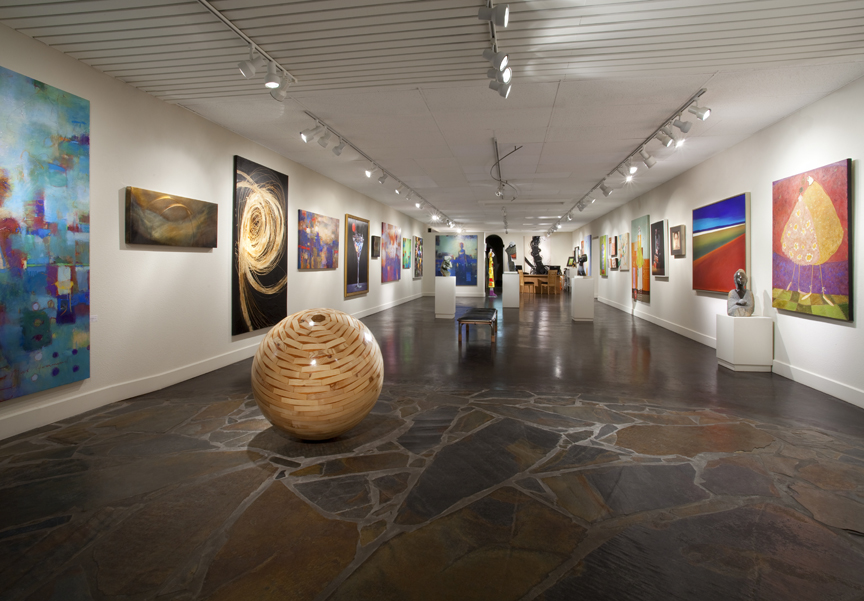
Bonner David Galleries, with locations in Scottsdale, Arizona, and New York, provides an ideal venue for Morris's introspective pieces. Founded in 1997 by Clark David Bonner and his wife Bonnie, the gallery specializes in contemporary realism and abstraction, representing artists who blend technical prowess with emotional depth. The New York space, known for its intimate setting, allows Morris's works to resonate in a urban context, contrasting the natural inspirations behind them. The exhibition features pieces like Be The Light (2025) and Red Light (2025), which play with luminosity and shadow to create glowing, meditative surfaces. Earlier works, such as French 75 (2021), are included to trace her stylistic progression, showing how her abstractions have grown bolder over time.
Morris's background in traditional landscapes informs her abstract turn. After years of producing representational pieces, she realized the power of distilling scenes to their emotional core. This evolution mirrors broader trends in contemporary art, where artists like Helen Frankenthaler and Mark Rothko used color fields to evoke inner states. Yet, Morris's work remains uniquely tied to place—her California roots infuse her palettes with sun-drenched vibrancy, while her travels to islands and parks add layers of tranquility and discovery. In a world dominated by digital imagery, her paintings offer a tactile reminder of nature's subtle symphonies.
Critics have praised Morris for her ability to make the familiar feel profound. Her abstractions avoid chaos, opting instead for balanced compositions that reward close viewing. The interplay of colors—vibrant blues against warm earth tones—creates optical rhythms that mimic the ebb and flow of music or memory. This quiet intensity sets her apart from more aggressive abstract expressionists, aligning her with a contemplative tradition in American art.
The exhibition's timing is apt, coinciding with a renewed interest in abstract landscapes amid environmental concerns. Morris's works subtly address humanity's connection to nature, not through explicit activism but through immersive experiences that foster appreciation. Galleries like Bonner David play a crucial role in promoting such artists, bridging West Coast creativity with East Coast audiences.
Beyond "Blue Note," Morris's influence extends to education and community. She has conducted workshops on abstraction, encouraging emerging artists to explore beyond representation. Her pieces are held in private collections and have been featured in group shows across the U.S., solidifying her status as a key figure in contemporary abstraction.
In reflecting on her process, Morris emphasizes joy amid challenge: the fun of experimentation balanced with the hard work of refinement. This ethos permeates "Blue Note," making it not just a visual feast but an emotional journey. As visitors to Bonner David Galleries experience her works, they are reminded that art, like a blue note, can bend perception to reveal deeper truths.
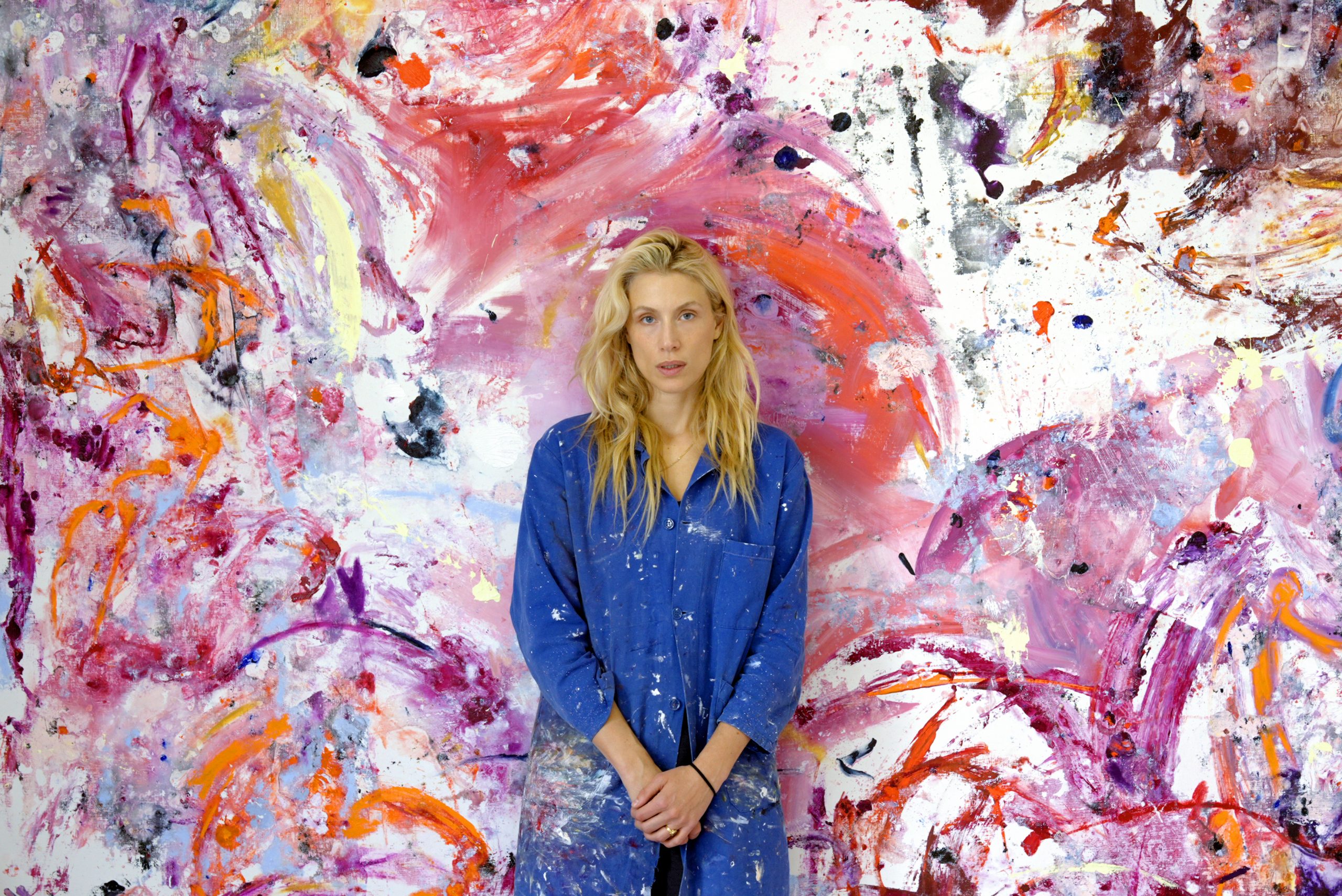
Morris's palette often draws from California's diverse landscapes—golden hills, azure coasts, and verdant parks. In Cote d'Azur (2025), she captures the Mediterranean's luminous quality through abstracted forms, evoking a sense of escape. Such pieces demonstrate her skill in translating fleeting impressions into enduring art.
The gallery's Scottsdale origins add a layer of context; founded in the Southwest's artistic hub, Bonner David has expanded to New York, bringing regional talents to global stages. Morris, with her West Coast sensibility, fits perfectly into this narrative, her abstractions resonating with collectors seeking emotional depth.
Influences on Morris include the light studies of Impressionists like Claude Monet, but she pushes further into abstraction. Her music-inspired approach echoes Paul Klee's theories on color and rhythm, though Morris prioritizes personal memory over formalism.
As the exhibition concludes, it leaves a lasting impact, affirming Morris's place in contemporary art. Her ability to evoke atmosphere through abstraction ensures her work will continue to inspire.

Future projects for Morris may explore further sensory integrations, perhaps incorporating urban soundscapes or seasonal changes. For now, "Blue Note" stands as a testament to her innovative spirit.
Bonner David Galleries, with its focus on emerging and established artists, continues to be a vital platform. Visitors can explore more at their official website, where virtual tours offer access beyond the physical show.
In conclusion, Gail Morris's "Blue Note" exemplifies the power of abstraction to capture the intangible. Through her unique lens, landscapes become symphonies of emotion, inviting us to listen with our eyes.
FAQ
Who is Gail Morris?
Gail Morris is a California-based artist known for abstract landscapes that capture emotional and sensory experiences of places, light, and music.
What is the "Blue Note" exhibition about?
The solo show at Bonner David Galleries features bold abstractions inspired by the musical "blue note," emphasizing expressive complexity in visual form, on view through November 29, 2025.
How does Morris's background influence her work?
Her early career in traditional landscapes allowed her to master representation, enabling a shift to abstractions focused on psychological moods and impressions.
What themes does Morris explore?
She draws from physical sites like rivers and parks but abstracts them to evoke memory, atmosphere, and multisensory experiences, including musical influences.
Where is Bonner David Galleries located?
The gallery has spaces in Scottsdale, Arizona, and New York, specializing in contemporary realism and abstraction.